Forget Eazy-E

Eazy-E was 31 when he died of AIDS in 1995.

Eazy-E has been called the godfather of “gansta rap”. An American rapper who performed solo and in the hip hop group N.W.A., he is notorious for his creation of Ruthless Records which featured artists such as Dr. Dre, Ice Cube, DJ Yella, MC Ren, and Arabian Prince and produced such hits as “Boyz-n-the-Hood”.

Eazy-E’s debut album, Eazy-Duz-It, was released on September 16, 1988, and featured twelve tracks. It featured the musical genres West Coast Hip Hop, Gansta Rap and Golden Age Hip Hop. It has sold over 2.5 million copies in the United States and reached number forty-one on the Billboard 200. Eazy-E’s only solo recording was a remix of the song “8 Ball”, which originally appeared on N.W.A and the Posse. The album featured Eazy-E’s writing and performing; he performed on eight songs and helped write four songs.

Eazy’s main influences included 1970s funk groups, contemporary rappers, and comedians. When reviewing Eazy’s albums, many critics noted his unique overall style, with Steve Huey of the All Music Guide writing: “While his technical skills as a rapper were never the greatest, his distinctive delivery (invariably described as a high-pitched whine), over-the-top lyrics, and undeniable charisma made him a star.”

Since his 1995 death, he has inspired numerous book and video biographies dealing with both his career and the specifics of his death. Jerry Heller and Gil Reavill wrote the book Ruthless: A Memoir, which deals with Eazy-E’s lifestyle and diagnoses. When Eazy was diagnosed with AIDS, many stories and statements were released in magazines like Jet, Vibe, Billboard, The Crisis, and Newsweek discussing AIDS and the rap community in a new way.
Remember Eazy-E

Eazy-E has been called the godfather of “gansta rap”. An American rapper who performed solo and in the hip hop group N.W.A., he is notorious for his creation of Ruthless Records which featured artists such as Dr. Dre, Ice Cube, DJ Yella, MC Ren, and Arabian Prince and for producing such hits as “Boyz-n-the-Hood”.

Eazy-E’s debut album, Eazy-Duz-It was released on September 16, 1988, and featured twelve tracks. It featured the musical genres West Coast Hip Hop, Gansta Rap and Golden Age Hip Hop. It has sold over 2.5 million copies in the United States and reached number forty-one on the Billboard 200. Eazy-E’s only solo recording was a remix of the song “8 Ball”, which originally appeared on N.W.A and the Posse. The album featured Eazy-E’s writing and performing; he performed on eight songs and helped write four songs.

Eazy’s main influences included 1970s funk groups, contemporary rappers, and comedians. When reviewing Eazy’s albums, many critics noted his unique overall style, with Steve Huey of the All Music Guide writing: “While his technical skills as a rapper were never the greatest, his distinctive delivery (invariably described as a high-pitched whine), over-the-top lyrics, and undeniable charisma made him a star.”

Since his 1995 death, he has inspired numerous book and video biographies dealing with both his career and the specifics of his death. Jerry Heller and Gil Reavill wrote the book Ruthless: A Memoir, which deals with Eazy-E’s lifestyle and diagnoses. When Eazy was diagnosed with AIDS, many stories and statements were released in magazines like Jet, Vibe, Billboard, The Crisis, and Newsweek discussing AIDS and the rap community in a new way.

Eazy-E was 31 when he died of AIDS in 1995.

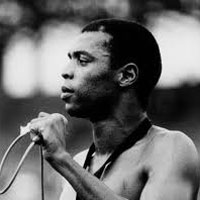
Remember Fela Kuti

Fela Anikulapo Kuti was a Nigerian multi-instrumentalist musician and composer, pioneer of Afrobeat music, human right activist, and a political force against corruption and tyranny. Fela first developed his Afrobeat genre in Ghana in 1967. In 1969 he brought his new sound to the United States where Fela discovered the Black Power movement through Sandra Smith a partisan of the Black Panther Party—which would heavily influence his music and political views. Without the necessary work permits, his band, then Nigeria ’70, performed a quick recording session in Los Angeles that would later be released as The ’69 Los Angeles Sessions.

After Fela and his band returned to Nigeria, the band was renamed The Africa ’70, as lyrical themes changed from love to social issues. He then formed the Kalakuta Republic, a commune, recording studio and home for many connected to the band that he later declared independent from the Nigerian state. Fela and the commune were the subject of continuous controversy and frequently targeted with violent government retaliation for Fela’s strong anti-governmental music and writings. In 1977 Fela and the Afrika ’70 released the hit album Zombie, a scathing attack on Nigerian soldiers using the zombie metaphor to describe the methods of the Nigerian Military. The album was a hit and infuriated the government, setting off a vicious attack against the Kalakuta Republic. Fela was severely beaten, and his elderly mother was thrown from a window, causing fatal injuries. The Kalakuta Republic was burned, and Fela’s studio, instruments, and master tapes were destroyed. Fela’s response to the attack was to deliver his mother’s coffin to the Dodan Barracks in Lagos, and to write two songs, “Coffin for Head of State” and “Unknown Soldier”.

Despite the massive setbacks, Fela was determined to come back. He formed his own political party which he called Movement of the People. In 1979 he put himself forward for President in Nigeria’s first elections for more than a decade but his candidacy was refused.

On 3 August 1997, Fela’s brother, Olikoye-Ransome Kuti already a prominent AIDS activist announced his younger brother’s death a day earlier from Kaposi’s sarcoma which was brought on by AIDS. More than a million people attended Fela’s funeral at the site of the old Shrine compound.

Fela Anikulapo Kuti was 59 when he died of AIDS in 1997.

Forget Liberace

Liberace was 67 when he died of AIDS in 1987.

Best known for his extravagant showmanship, and accessible treatments of classic pieces such as Chopin’s “Minute Waltz” and Tchaikovsky’s “Piano Concerto No. 1”, Liberace was a larger than life vocalist, pianist and performer. His career spanned four decades of concerts, recordings, motion pictures, television and endorsements. During the 1950s–1970s he was the highest-paid entertainer in the world and embraced a lifestyle of flamboyant excess both on and off the stage.

Although he was classically trained, Liberace made the decision to move away from straight classical performance in the 1940’s and reinvented his act to one featuring pop alongside the classics. Largely abandoning the classical concertgoer, he changed from classical pianist to showman, unpredictably and whimsically mixing serious with light fare. Famous for his gimmicks such as playing along with a phonograph or alongside a candelabrum, and wearing gaudy golden tailcoats, his innovation came largely out of necessity given the harsh competition he faced in the classical piano world. He quickly distinguished himself from the majority of musicians by experimenting with lighting, stage effects, costuming and audience interaction.

Making a name for himself mostly between nightclubs and extravagant Las Vegas shows, Liberace was often criticized and received harsh reviews of his piano playing and lack of reverence and fealty to the great composers. However, Liberace would famously respond “I do not give concerts, I put on a show”. Unlike the concerts of classical pianists which normally ended with applause and a retreat off-stage, Liberace’s shows ended with the public invited on-stage to touch his clothes, piano, jewelry, and hands. Kisses, handshakes, hugs, and caresses usually followed. Despite the critics Liberace performed for Harry S. Truman and Pope Pius XII, and performed with such respected giants as Nat King Cole and Sammy Davis Jr.

Liberace struggled for years against claims that he was a homosexual engaging in numerous lawsuits and contrived relationships. The cause of his death is controversial to this day.

Remember Robert Mapplethorpe

Robert Mapplethorpe first gained notice in the late 1970’s for his classically  composed, elegantly lit and expertly printed photographs of still lifes and nudes, often with explicit homoerotic content. His works gave an undeniable, sculpture-like beauty to controversial subject matter, an aspect which disarmed many of his fans and detractors. He set himself apart from many of his contemporaries by treating the camera less as a documentary tool and more as a platform for invention and role playing. In two self-portraits taken in 1980, he appeared once as a leather clad macho man and again as a sexy femme fatale.

He candid homoeroticism is recognized for generating an intense debate over the public funding of artwork. In 1989, Robert Mapplethorpe: The Perfect Moment was set to show at the Corcoran Gallery of Art, however when the board of the Corcoran and several members of the U.S. Congress saw the pieces to be shown, the museum refused the exhibit, citing inappropriate content. The show was moved to the Washington Project for the Arts which sponsored the exhibit from July 21 to August 13, 1989. In 1990, the Contemporary Arts Center was charged with obscenity. They were tried and found not guilty. This incident along with future incidents such as the UCE controversy, where the West Midlands Police attempted (and failed) to ban a book of his images from a The University of Central England, are credited with broadening and affirming artist rights even as they compromised public funding for future controversial arts projects.

Nearly a year before his death, the ailing Mapplethorpe helped found the Robert Mapplethorpe Foundation, Inc to protect his work, advance his creative vision, and to promote the causes he cared about. Since his death, the Foundation has raised and donated millions of dollars to fund medical research in the fight against AIDS and HIV infection.

Robert Mapplethorpe was 42 when he died of AIDS in 1989.


Remember Liberace

Best known for his extravagant showmanship, and accessible treatments of classic pieces such as Chopin’s “Minute Waltz” and Tchaikovsky’s “Piano Concerto No. 1,” Liberace was a larger than life vocalist, pianist and performer. His career spanned four decades of concerts, recordings, motion pictures, television and endorsements. During the 1950s–1970s he was the highest-paid entertainer in the world and embraced a lifestyle of flamboyant excess both on and off the stage.

Although he was classically trained, Liberace made the decision to move away from straight classical performance in the 1940’s and reinvented his act to one featuring pop alongside the classics. Largely abandoning the classical concertgoer, he changed from classical pianist to showman, unpredictably and whimsically mixing serious with light fare. Famous for his gimmicks such as playing along with a phonograph or alongside a candelabrum, and wearing gaudy golden tailcoats, his innovation came largely out of necessity given the harsh competition he faced in the classical piano world. He quickly distinguished himself from the majority of musicians by experimenting with lighting, stage effects, costuming and audience interaction.

Making a name for himself mostly between nightclubs and extravagant Las Vegas shows, Liberace was often criticized and received harsh reviews of his piano playing and lack of reverence and fealty to the great composers. However, Liberace would famously respond “I do not give concerts, I put on a show”. Unlike the concerts of classical pianists which normally ended with applause and a retreat off-stage, Liberace’s shows ended with the public invited on-stage to touch his clothes, piano, jewelry, and hands. Kisses, handshakes, hugs, and caresses usually followed. Despite the critics Liberace performed for Harry S. Truman and Pope Pius XII, and performed with such respected giants as Nat King Cole and Sammy Davis Jr.

Liberace struggled for years against claims that he was a homosexual engaging in numerous lawsuits and contrived relationships. The cause of his death is controversial to this day.

Liberace was 67 when he died of AIDS in 1987.

Remember Freddie Mercury

Freddie Mercury is best known as the over the top front-man of the glam rock band Queen, whose worldwide hits like “Bohemian Rhapsody” and “We Are the Champions” fused rock theatricality with heavy metal sound.

Beginning in the early 70’s, Freddie Mercury led Queen to eighteen albums that sold 80 million copies worldwide along with nearly a dozen U.S. hit singles. Queen threaded British glam pop, operatic arias, hard rock and theatrical accoutrement to create a new sort of artist and sound. Mercury took everything further with his love of excess and blatant disregard for conventional limits. “Bohemian Rhapsody” is only one example of his musical extravagance. He pushed it even further when it came to his style and performance persona often appearing in leather storm-trooper outfits or woman’s garb, pointedly challenging and mocking the typically homophobic hard-rock world.

Sighting his greatest influences as Jimi Hendrix and Liza Minelli, he has garnered a fame as unique as his heroes’. Raised in India, he has been referred to as “Britain’s first Asian rock star”, shocking the world with his four octave range in the early 70’s. In 2006, Time Asia named him one of the most influential Asian heroes of the past 60 years, and he continues to be voted one of the greatest singers in the history of popular music. In 2008, Rolling Stone editors ranked him number 18 on their list of the 100 greatest singers of all time.

Mercury, famous for his privacy and refusal to do interviews, hid news of his fatal illness for years, despite the prevalence of media attention to the issue. On his deathbed he released a final statement confirming that he was HIV positive and had AIDS.

Freddie Mercury was 45 when he died of AIDS in 1991.


Forget Arthur Ashe

Arthur Ashe was 50 when he died of AIDS in 1993.

Arthur Ashe was the first African American tennis player ever selected to the United States Davis Cup team and the only black man to ever win the singles title at Wimbleton, The U.S. Open or Australian Open. He was the winner of three Grand Slams, was inducted into three halls of fame, was listed 30th in Tennis Magazines 40 Greatest Players of the Tennis Era, and has been called one of the 100 Greatest African Americans.

Alongside his athletic accomplishment, Ashe utilized his standing in the sports community to wage war against inequality. When he was denied a visa by the South African government, thereby keeping him out of the South African Open, Ashe used this denial to publicize South Africa’s apartheid policies. In the media, Ashe called for South Africa to be expelled from the professional tennis circuit.

After his retirement, Ashe took on many new tasks, including writing for Time magazine, commentating for ABC Sports, founding the National Junior Tennis League, and serving as captain of the U.S. Davis Cup team. He was elected to the International Tennis Hall of Fame in 1985.

In 1988, Ashe fell ill after contracting HIV from the blood transfusions he received during heart surgery. In the last year of his life, Ashe did much to call attention to AIDS sufferers worldwide. Two months before his death, he founded the Arthur Ashe Institute for Urban Health to help address issues of inadequate health care delivery and was named Sports Illustrated magazine’s Sportsman of the Year. He also spent much of the last years of his life writing his memoir Days of Grace, finishing the manuscript less than a week before his death.

Forget Freddie Mercury

Freddie Mercury was 45 when he died of AIDS in 1991. Mercury, famous for his privacy and refusal to do interviews, hid news of his fatal illness for years, despite the prevalence of media attention to the issue. On his deathbed he releases a final statement confirming that he was HIV positive and had AIDS.

Mercury is best known as the over the top front-man of the glam rock band Queen, whose worldwide hits like “Bohemian Rhapsody” and “We Are the Champions” fused rock theatricality with heavy metal sound. Beginning in the early 70’s, Freddie Mercury led Queen to eighteen albums that sold 80 million copies worldwide along with nearly a dozen U.S. hit singles. Queen threaded British glam pop, operatic arias, hard rock and theatrical accoutrement to create a new sort of artist and sound. Mercury took everything further with his love of excess and blatant disregard for conventional limits. “Bohemian Rhapsody” is only one example of his musical extravagance. He pushed it even further when it came to his style and performance persona often appearing in leather storm-trooper outfits or woman’s garb, pointedly challenging and mocking the typically homophobic hard-rock world.

Sighting his greatest influences as Jimi Hendrix and Liza Minelli, he has garnered a fame as unique as his heroes’. Raised in India, he has been referred to as “Britain’s first Asian rock star”,  shocking the world with his four octave range in the early 70’s. In 2006, Time Asia named him one of the most influential Asian heroes of the past 60 years, and he continues to be voted one of the greatest singers in the history of popular music. In 2008, Rolling Stone editors ranked him number 18 on their list of the 100 greatest singers of all time.


Forget Felix Gonzalez-Torres

Felix Gonzales-Torres was 38 when he died of AIDS in 1996.

Felix Gonzalez-Torres was a Cuban born, American visual artist who is best known for his minimalist and relational installations that deal with issues of depletion and regeneration, loss and inertia. Utilizing mundane materials such as strings of light bulbs, cellophane wrapped candy and stacks of paper, González-Torres has created some of his most memorable exhibits such as Untitled (Memorial Day Weekend) or Untitled (Placebo). González-Torres was considered within his time to be a process artist due to the nature of his ‘removable’ installations. Many of his artworks invite the viewer to take a piece of the work with them such as a packaged candy from a pile in the corner of an exhibition space and, in so doing, contribute to the slow disappearance of the sculpture over the course of the exhibition. His work combines an almost classical sense of restraint and beauty with a critical sensibility.

His work is often discussed in the context of his struggle with HIV and AIDS. In 1987 he joined Group Material, a New York-based group of artists whose intention was to work collaboratively, adhering to principles of cultural activism and community education. Along with the other members of the group — Doug Ashford, Julie Ault, Karen Ramspacher, and Tim Rollins — in 1989 González-Torres was invited by the MATRIX Gallery at the Berkeley Art Museum and Pacific Film Archive  to explore the subject of AIDS. His struggle became especially public when his lover Ross Laycock died of AIDS and González-Torres memorialized him with Untitled (1991), twenty four billboards installed throughout New York City that show a monochrome photograph of an unoccupied bed. A 1996 exhibition at the Guggenheim Museum in New York was his last solo exhibition while he was still living but his career and fame has continued to grow since his death. In 2007 he represented the United States at the 52nd International Art Exhibition, la Biennale de Venezia [the Venice Biennale], only the second artist in the 100+ year history of the event to represent the United States after his death.