AIDS Bottle Project

The AIDS Bottle Project is an interactive artist’s action conceived as a means of focusing attention on the AIDS crisis. From 1990 – 2000, in sites all over the United States and Europe, the ICI displayed bottles on December 1st of each year in conjunction with World AIDS Day.

Each bottle represents a person who has died from complications due to AIDS or HIV. The name and year of death is etched on the glass and a short biography is printed under the lid. In public displays, the bottles were part of an interactive process. Jars were left open so that objects of personal significance could be added to them by visitors. Response books were also available to record a range of emotions. At the end of the display, the bottles were distributed to the public free of charge. The jars were offered not only to remember those who had died, but to emphasize the individual make-up of a community and the responsibility of each living member to resist complacency about the ongoing epidemic.
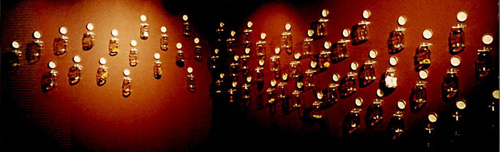
 

AIDS Bottle Project Exhibition History
1999 Over 1,000,000/under 24 at Sam Francis Gallery, Crossroads School for Arts and Sciences, Santa Monica
1998 Displayed at Santa Monica Festival, Santa Monica
100 Unknown Women at The Institute of Cultural Inquiry
1994
Workshop and display at Johnson State College, Vermont
Lecture and display at Montgomery Museum of Art, Alabama
Displayed at Midnight Special Bookstore , Santa Monica, CA.
1993 Display and lecture at Williams College, Massachusetts
City University of New York, New York City
1992 Displayed at Los Angeles Municipal Gallery,
SITE, Los Angeles
SPACE Gallery, Los Angeles
Watts Towers, Los Angeles
Birchfield Art Center, Buffalo, NY
University of California, Santa Barbara
1991 Displayed at Los Angeles County Museum of Art, LACMA
L.A. Eyeworks, Los Angeles
Armand Hammer Museum, Los Angeles
Grey Art Gallery, NYU, New York City
Washington D.C. Mall

Karl Bornstein Gallery, Santa Monica
Los Angeles Municipal Gallery
1990 Tactical intervention at Los Angeles County Museum of Art
Also shown at Richard Bennett Gallery, Los Angeles
1989 Visual AIDS launches Day Without Art on December 1 to coincide with World AIDS Day. The day of action and commemoration rallied artists and arts communities to remember those who have died from AIDS related illnesses.

AIDS Chronicles 2001

Status: COMPLETED
Cover artist and binder: Martin Gantman

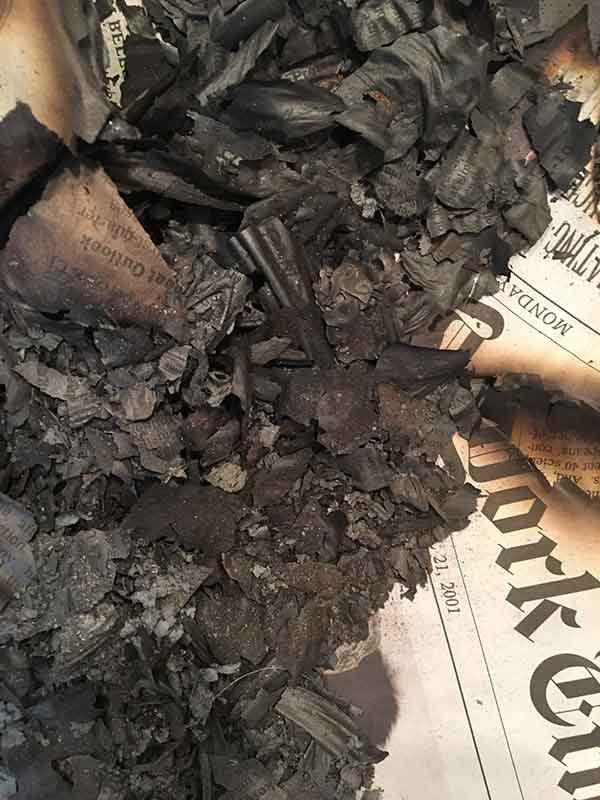
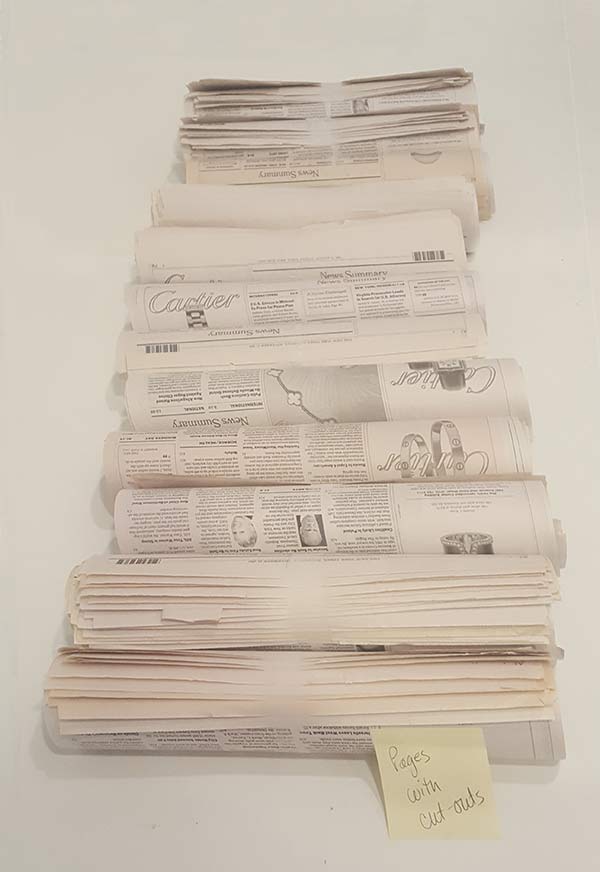
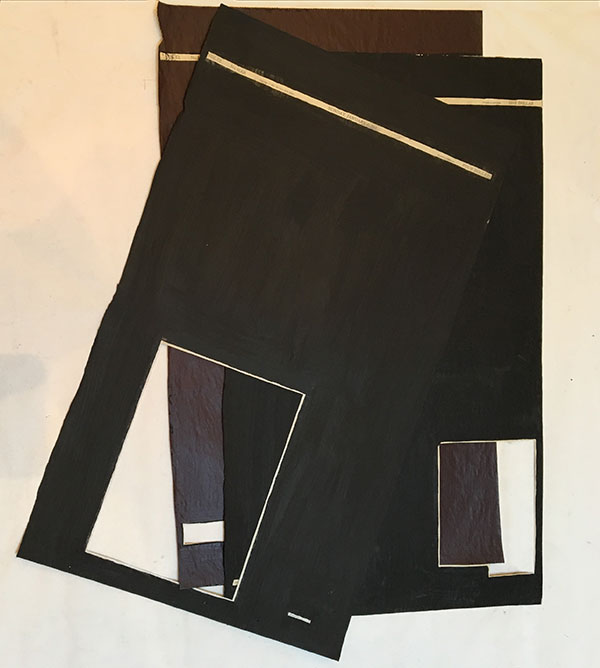
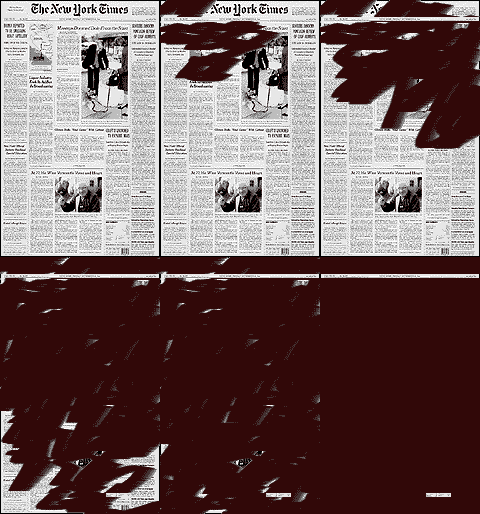
This edition is comprised of a single reliquary which houses all articles that mention HIV or AIDS along with the charred remains of the rest of the 2001 edition. 


Exhibition history:

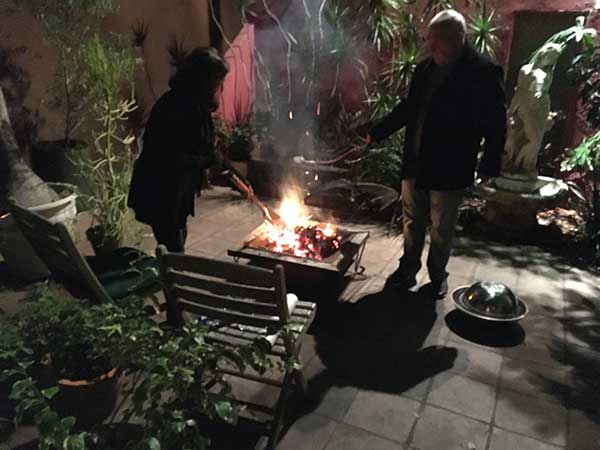
2016—Original pages were burnt during a public event at the ICI on December 1st, World AIDS Day


OVERVIEW – AIDS Chronicles in Production

ici-ac2013_7397-w  1996-ac-quilt-proposal-w

AIDS Chronicles Editions in Currently in Process
2014 In addition to any articles mentioning AIDS or HIV, this year will also feature Ebola ‘ghost articles’ to emphasize this year’s extensive coverage of the Ebola health crisis relative to AIDS despite the statistically much higher rate of AIDS-related deaths each day.

Artist: Lise Patt

2013 The first digital edition of the AIDS Chronicles was released online for viewing and download on December 1, 2015; a limited edition printed box set of these volumes is currently in production.

Artist: Sue-Na Gay

2006 A large, sculptural ‘ball’ edition formed from the pages that comprise the full Chronicle year.

Artist: Institute of Cultural Inquiry

2004 A digitally painted and manipulated edition.

Artist: Antoinette LaFarge

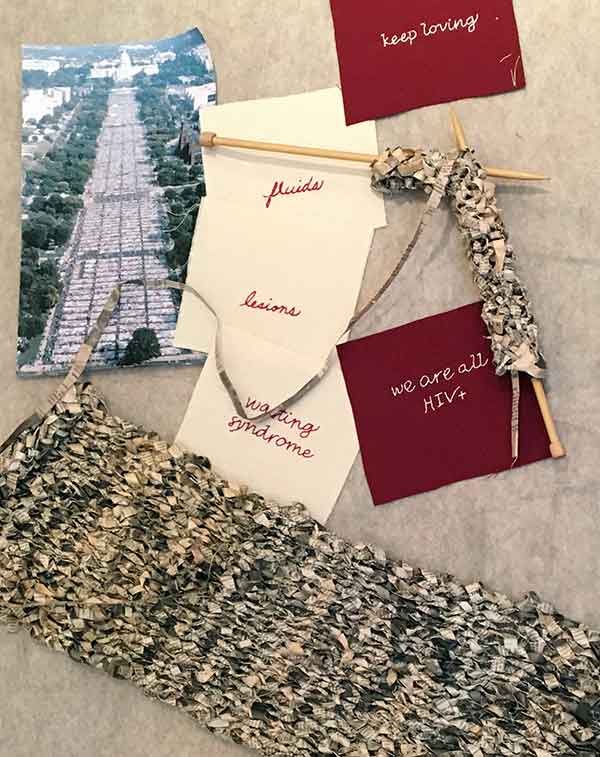
1996 The pages for this year have been made into ‘yarn’ and are being knitted into a large, unwieldy quilt to bring emphasis to that other memorial of AIDS that was shown in its entirety on the Washington, D.C. Mall for the last time in the same year as this AIDS Chronicle.

Artist: The ICI family of Associates, Interns, and Volunteers

AIDS Chronicles 2010

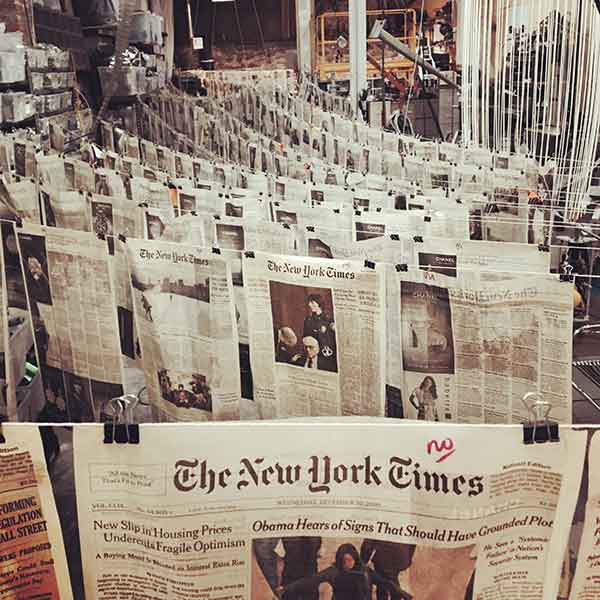
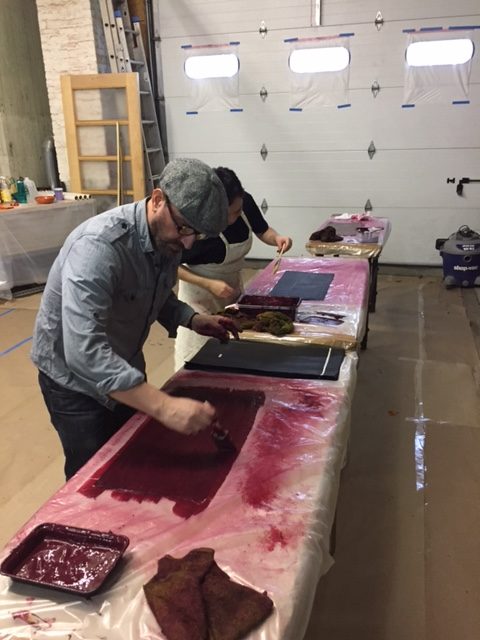
The pages for this edition are currently being produced in NYC under the supervision of ICI Associate, Deborah Cullen-Morales. The cover art/’binding’ for the year will be designed and produced by Vladimir Cybil Charlier with special emphasis on the Haitian earthquake of January 2010.

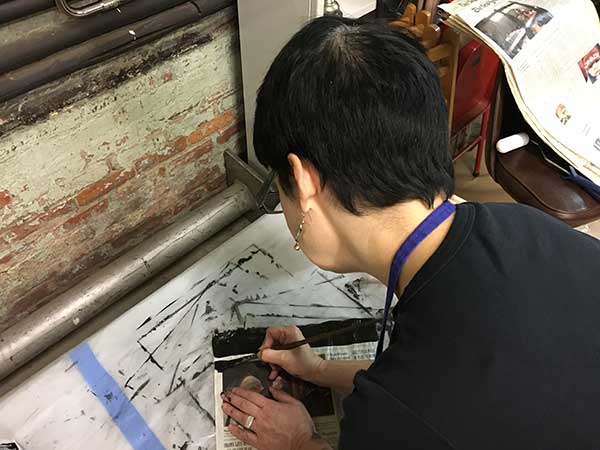
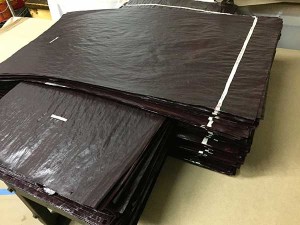
Images from the painting sessions used to complete this edition are seen below.

ici-ac2013_7391-w ICI-AIDSac2010-ptg-w  ici-ac2013_7394-w            ici-ac2013_9609-1-wici-ac2013_8643-1-w


AIDS Chronicles Display History

AIDS Chronicles Display History
2016 ICI Open House featuring the completion of the 2001 Chronicle; Production of the 2010 Chronicle in New York
2015 2013 Chronicle, the first digital edition of the AIDS Chronicles, is released online for viewing and download.
2012 ‘All the News That’s Fit to Paint’, paint-in event at the Institute of Cultural Inquiry, Los Angeles, CA
2008 2008 edition displayed at Kerckhoff Gallery, at UCLA.
2005 Portions of 1993, 1994, 1999, 2001, 2002, 2003, 2004 & 2005 editions displayed at Open House (Wunderkammer) event at the Institute of Cultural Inquiry, Los Angeles, CA.
2003 (10th Anniversary Exhibition of the AIDS Chronicles)
1995, 1997, 1998, 2000 & 2003 editions displayed at Sam Francis Gallery at Crossroads School in  Santa Monica, CA with a performance by J. Todd.
1998 1998 edition displayed in front of the New York Public Library, New York. Funded in part by the Robert Farber Foundation and Visual AIDS; 1997 edition displayed at the Institute of Cultural Inquiry, Santa Monica, CA with a reading by J. Todd.
1996 Special Los Angeles Times 1996 edition displayed at Midnight Special Bookstore, Santa Monica, CA; 1995 edition displayed at the Institute of Cultural Inquiry in Santa Monica, CA.
1995 1995 edition displayed at the New Museum of Contemporary Art, New York; Special Los Angeles Times edition displayed at Midnight Special Bookstore, Santa Monica, CA.
1993 1993 edition displayed at CUNY Graduate Center, New York, NY

Return to AIDS Chronicles Overview

AIDS Chronicles 1996

1996-ac-quilt-proposal-w

An unfinished quilt project in the ICI Ephemera Kabinett will jumpstart the 1996 Chronicle. The abandoned project included some quilted panels displaying terms related to AIDS. Embroidered on canvas in 26 pairs — two for each letter of the alphabet — white panels spell out the public face of AIDS, while red panels counter with more personal responses. In its first imagining, the 1996 AIDS Chronicle would dialogue with the national AIDS quilt.

img_7527-wFortuitously, 1996 turned out to be the last year the AIDS Quilt was shown in its entirety on the Washington D.C. Mall. The quilt’s display as a singular, political object — always an important function for the quilt — is often overshadowed by the attention given to the mourning function of the blanket’s individual panels. In it’s revised plan, the 1996 AIDS Chronicle aims to revive some of the discussions surrounding the AIDS Quilt’s dual role as a public and private document. In doing so, it offers a template by which the ICI can examine the dichotomies of its own AIDS project.

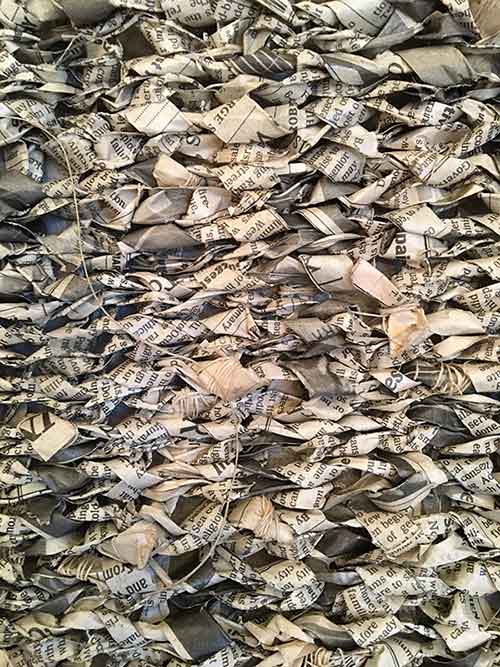
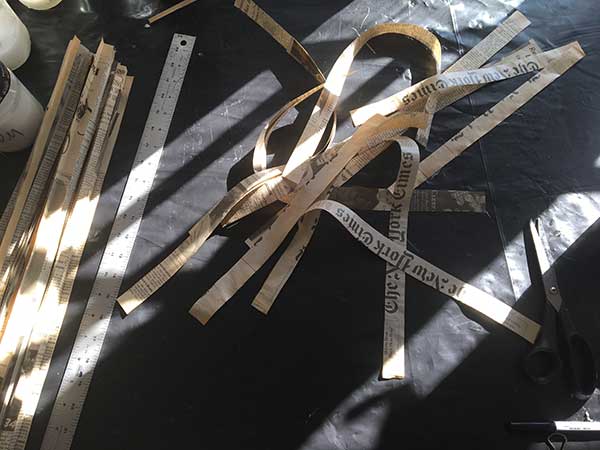
After the AIDS/HIV articles are isolated, the remaining newsprint will be used to create strips of newsprint ‘yarn.’ The yarn will be knitted into a large unwieldy blanket. Its ‘inconvenient’ size points to both the immensity of the pandemic and our inability to ‘hide’ its unbounded consequences. The Canvas panels will be used to create a storage pouch for the finished blanket.

img_7524-wimg_7494-w

The Honey Gatherers

Ueber das Sammeln von Honig                         – The Honey Gatherers

Christel Dillbohner’s site-specific installation at SPACE, Los Angeles, February/March 1993

“Insights/Einblicke”

catalog essay by Michael Lawrence, Los Angeles, 1994

“…..The Honey Gatherers utilized approximately 3,000 square feet to investigate the various aspects of the ancient art of honey gathering.
Using a wide range of materials, the installation was a metaphor for the human condition of searching happiness. The search specifically focused on gathering and filtering experiences in order to better understand those experiences.
The installation also exemplifies the artist creating art, of finding momentary meaning in the continual flow of events.”

ICI New Visualist-in-Residence Julene Paul

The ICI would like to welcome our newest Visualist-in-Residence, Julene Paul.
Her proposed project is an exploration of memory and its visual representation in space, taking the visual exterior of a city as a starting point and investigating the worlds that lie beneath the present and what they represent in the past as well as future. Her project hopes to create an ambitious representation of how memory can be represented visually and spatially.

The ICI is looking forward to development of Paul’s project and hope the experience proves illuminating for both parties.


Forget Fela Kuti

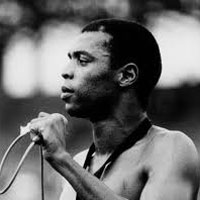
On 3 August 1997, Fela’s brother, Olikoye-Ransome Kuti already a prominent AIDS activist announced his younger brother’s death a day earlier from Kaposi’s sarcoma which was brought on by AIDS. Fela Anikulapo Kuti was 59 when he died of AIDS in 1997.

Fela was a Nigerian multi-instrumentalist musician and composer, pioneer of Afrobeat music, human right activist, and a political force against corruption and tyranny. Fela first developed his Afrobeat genre in Ghana in 1967. In 1969 he brought his new sound to the United States where Fela discovered the Black Power movement through Sandra Smith a partisan of the Black Panther Party—which would heavily influence his music and political views. Without the necessary work permits, his band, then Nigeria ’70, performed a quick recording session in Los Angeles that would later be released as The ’69 Los Angeles Sessions.

After Fela and his band returned to Nigeria, the band was renamed The Africa ’70, as lyrical themes changed from love to social issues. He then formed the Kalakuta Republic, a commune, recording studio and home for many connected to the band that he later declared independent from the Nigerian state. Fela and the commune were the subject of continuous controversy and frequently targeted with violent government retaliation for Fela’s strong anti-governmental music and writings. In 1977 Fela and the Afrika ’70 released the hit album Zombie, a scathing attack on Nigerian soldiers using the zombie metaphor to describe the methods of the Nigerian Military. The album was a hit and infuriated the government, setting off a vicious attack against the Kalakuta Republic. Fela was severely beaten, and his elderly mother was thrown from a window, causing fatal injuries. The Kalakuta Republic was burned, and Fela’s studio, instruments, and master tapes were destroyed. Fela’s response to the attack was to deliver his mother’s coffin to the Dodan Barracks in Lagos, and to write two songs, “Coffin for Head of State” and “Unknown Soldier”.

Despite the massive setbacks, Fela was determined to come back. He formed his own political party which he called Movement of the People. In 1979 he put himself forward for President in Nigeria’s first elections for more than a decade but his candidacy was refused. More than a million people attended Fela’s funeral at the site of the old Shrine compound.