Visualist-in-Residence Project

all_good_menCD-VIR-w

PLEASE NOTE: This is an archived Call for Applicants from the 2014 VIR season. The VIR program is currently part of the With Everything but the Monkey’s Head project. We are  not taking any new applications at this time.

CALL FOR APPLICANTS

The ICI is happy to announce the launch of its Visualist-in-Residence (VIR) Project for artists, art theorists, filmmakers, writers, and other visual researchers and cultural producers who are committed to studio-based research and the production of knowledge. The VIR offers visual researchers (or research teams) an opportunity to collaborate with the ICI for 6 – 8 weeks as they develop their work within a visual research template. We encourage you to read our brochure on visual research and to explore this topic on our website. Applications are currently being accepted for visual researchers whose cultural investigations, analyses, examinations, and experimentations are sympathetic with the Institute’s formulation of Visual Research. We encourage proposals from artists, writers, scholars and serious tinkerers who work in mediums or with ideas that typically fall outside traditional visual genres. For 2014 we are especially interested in projects that address the Institute’s current research theme: PHANTOM, MIRRORED, AND DOUBLED WORLDS. We are looking for adventurous residents who are interested in bringing new energies, concepts and ideas to the organization.

THE VIR FACILITY

The ICI provides a well-equipped study and production facility in the Institute’s main building . The VIR will have a private, dedicated space that can function as an artist’s studio, a writing room, a space for gathering data or a quiet space for evaluation and contemplation. The resident will also have access to the ICI’s equipment including a wireless network, computers, scanners, printers, analog film and movie cameras and, upon request, a photographic darkroom. The resident will have unrestricted access to their work space but the ICI does not provide room and board. Residents are prohibited from living in their workspace due to strictly-enforced fire safety codes.

THE RESIDENCY

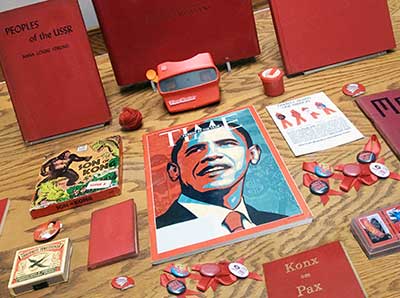
Over the course of the residency it is anticipated that the resident will engage physically or psychically with the topography of the ICI space either through an active engagement with objects from the ICI library or Repository or through manipulation of the ICI physical space which includes a large garden and patio. In addition to the research space and publicity, the Institute will provide planning assistance, manpower and limited financial assistance to help realize the VIR project. To aid you in your research, we also offer a small collection of antique devices, arcane apparatuses, old-fashion interfaces, a library filled with books and esoteric pamphlets and a repository with a host of cultural detritus from the last two centuries. The in-progress Institute residency project will be open to the public by appointment every odd Thursday and Saturday. There will be a public event towards the end of the residency so that the resident can share his or her ‘findings’ with the public. Choosing from a variety of formats (lectures, performance, film screening, symposium), the resident will be encouraged to engage ICI associates and the organization’s curious spectators in a manner that eschews traditional exhibition practices. At the conclusion of the residency, the resident will be asked to create a material trace of their project for the ICI repository where it will become a part of our visual culture laboratory and/or traveling collection. In addition, the resident will be expected to document their research on a dedicated VIR blog during the course of their residency.

 FEES

The VIR space is offered free of charge and unlike most residency programs, we do not require an application fee. There is a $75 lab fee to be paid by each resident to help defray costs for maintenance of our computers and equipment. If this fee is prohibitive and/or dissuades you from applying, please contact us. Limited assistance might be available to help defray this cost. The ICI will also work with out-of-area residents to help them secure housing for their tenure at the ICI although this responsibility ultimately rests with the resident. We encourage the use of social media and housing sites such as airbnb.com. There is no funding from the ICI for room and board.

 APPLICATION PROCEDURE

Applications for the VIR project can be found here. In addition to the completed application, please supply us with a current CV and up to 5 samples of your previous work that we can easily access through an internet interface such as dropbox. Applications for the 2015-2016 VIR session are no longer being accepted. 

For more information contact us at info@culturalinquiry.org.
AIDS Chronicles 1996

1996-ac-quilt-proposal-w

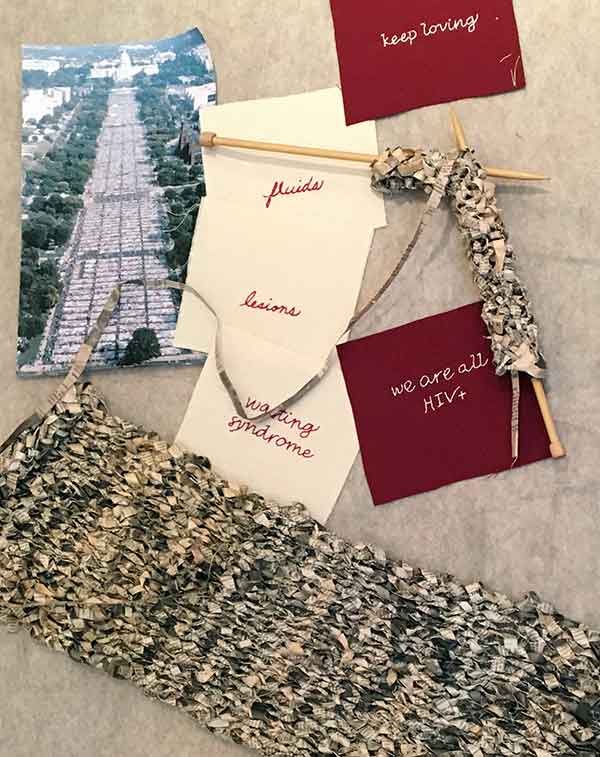
An unfinished quilt project in the ICI Ephemera Kabinett will jumpstart the 1996 Chronicle. The abandoned project included some quilted panels displaying terms related to AIDS. Embroidered on canvas in 26 pairs — two for each letter of the alphabet — white panels spell out the public face of AIDS, while red panels counter with more personal responses. In its first imagining, the 1996 AIDS Chronicle would dialogue with the national AIDS quilt.

img_7527-wFortuitously, 1996 turned out to be the last year the AIDS Quilt was shown in its entirety on the Washington D.C. Mall. The quilt’s display as a singular, political object — always an important function for the quilt — is often overshadowed by the attention given to the mourning function of the blanket’s individual panels. In it’s revised plan, the 1996 AIDS Chronicle aims to revive some of the discussions surrounding the AIDS Quilt’s dual role as a public and private document. In doing so, it offers a template by which the ICI can examine the dichotomies of its own AIDS project.

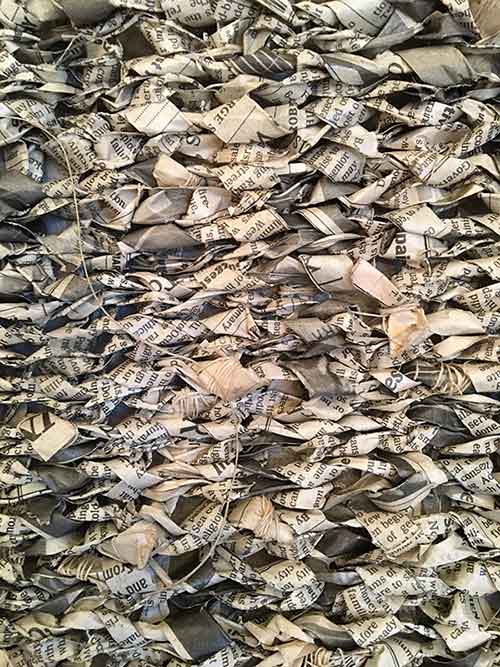
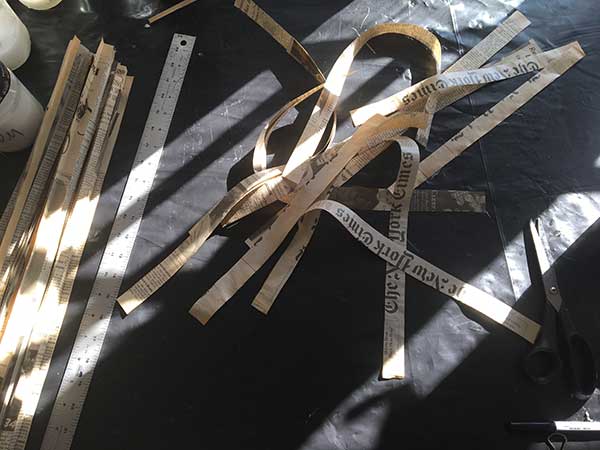
After the AIDS/HIV articles are isolated, the remaining newsprint will be used to create strips of newsprint ‘yarn.’ The yarn will be knitted into a large unwieldy blanket. Its ‘inconvenient’ size points to both the immensity of the pandemic and our inability to ‘hide’ its unbounded consequences. The Canvas panels will be used to create a storage pouch for the finished blanket.

img_7524-wimg_7494-w

2013 AIDS Chronicles Press Release

2013 AIDS Chronicles Release
ICI-AIDSac2013-cov1-w ICI-AIDSac2013-cov2-w ICI-AIDSac2013-cov3-w

The Institute of Cultural Inquiry (ICI) is pleased to announce the online publication of the 2013 AIDS Chronicle, the first digital edition of their longest ongoing project, the AIDS Chronicles, which brings attention to the AIDS pandemic through targeted, art-based activism.

The AIDS Chronicles were initiated in 1993, at the height of the AIDS pandemic in the United States, to create a record of the day-to-day discourse on AIDS and HIV in what is often referred to as the US “newspaper of record,” the New York Times. The goal of the project is simple—to subvert the newspaper’s usual hierarchy of focus in a way that narrows the reader’s attention to just one issue – the newspaper’s (lack of) reporting about the spread of the HIV virus and the global AIDS pandemic.
chronicle_anim
Each yearly AIDS Chronicle consists of 365 front pages from the New York Times, collected from December 1 (World AIDS Day) to November 30 (of the following year) that have been treated on both sides with three layers of acrylic paint to produce tangible, blood-red sheets that leave visible only images or articles that mention AIDS or HIV, along with the folio showing the date of publication, and the ‘obituaries’ (or in their absence a blank box) in the newspaper’s index as a direct reference to the listing of AIDS-related deaths deep inside the newspaper. The various artist ‘bound’ editions of the AIDS Chronicles are on permanent display in the ICI Library and are often shown publicly on December 1st to commemorate World AIDS Day and the Day With[out] Art.

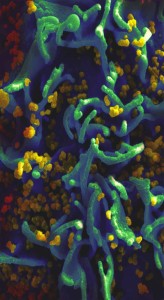
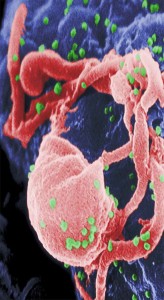
This year the ICI is publishing the 2013 AIDS Chronicle as a digital document, a virtual edition made possible after the New York Times began to offer high-resolution, downloadable PDFs of their daily front page in the summer of 2012. The digital publication, produced by the ICI’s Assistant Director and independent curator, Sue-Na Gay, will be divided into three volumes to facilitate download and interaction with cover images that capture both the horror and beauty of the HIV virus. The covers present the viewer with an up close and personal look at the HIV virus on a microscopic scale, shedding light on the virus’s destructive biological implications, while at the same time aesthetically blurring it into abstraction. Here, the disease is at once wholly present and yet still ‘flying under the radar’ to the untrained eye thus mirroring the coverage of the disease process in the media.

ICI-NYPL98-7-mod2-w

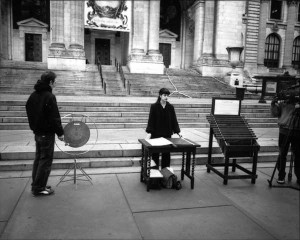
New York Public Library, 1998
ICI-ACchron_samfrancis-w

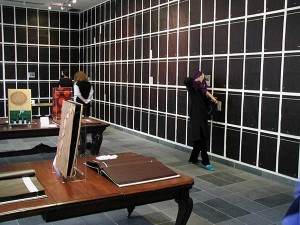
Sam Francis Gallery at Crossroads School, 2003

Over the years, pages of the AIDS Chronicles have been displayed in a variety of forms. As unbound, loose sheets, they have been shown covering walls or windows as an expansive and overwhelming document. In book form, the Chronicles have been displayed on a lectern or pedestal where volunteers from the community turn the pages to the sound of a gong that is hit at the rate of worldwide AIDS deaths for the year preceding the display. Each presentation has allowed viewers to study the information published by this prominent U.S. newspaper and encouraged them to reflect on the types of articles and the kind of attention and information the continuing pandemic is given. At the same time, the display of the pages in their repetitive, minimalist simplicity has allowed for quiet contemplation in order to remember those individuals who have been lost to the disease.

Since its inception, the Chronicles have quietly and self-reflectively ‘indexed’ the New York Times‘ reports on the spread of the HIV virus. The painted pages have endured to bear witness to the long decades when the virus jumped to Africa and Southeast Asia, when drug companies found financial opportunities in drugs meant to treat (but not cure) HIV, and when the virus turned into a cause célèbre fashion statement. The Chronicles continue to keep vigil to this day as nations push for -0- infection rates, reminding us that even though the Times has chosen to minimize its reporting on the AIDS virus, a choice evidenced by their daily, front page coverage of the 2014 Ebola epidemic in Africa, the newspaper did once report on hopes for a real cure and a real vaccine not just on expensive treatments that promise a life with the virus.
ICI-ACnyt_10_02_14-w
After twenty-two years, the AIDS Chronicles has met the ICI’s goal to produce a historical record of AIDS reporting in the New York Times but it has also created another unanticipated record, a collective document drawn from a different kind of AIDS reporting. That document is forged in the areas of pages that hold no AIDS/HIV articles; in the weight of those pages as they sit in silent tomes; in the residue left by human hands that touch their skin-like surfaces; in the small rips and tears that result from their ritualized turning; and especially in their seemingly unending supply. Their blood-red, cockled surfaces speak of the blood that carries the virus, of the fear of that blood, of passion, of pain over the loss of passion, of anger, of a rage that ‘sees red,’ and of the shame of having blood on one’s hands—of being caught red handed. The language of this other AIDS record comes not from the printed press but from the private, lived experience of loss, of anger, of shame.

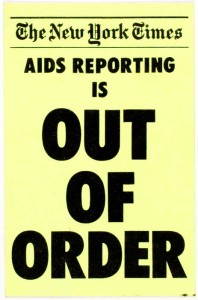
With its dual ability to operate as a record of public notice and as a document of private experience, the AIDS Chronicles project enters a new chapter as one of its tomes becomes an ambassador of AIDS activism on the Internet, albeit with new and different forms. Given that the digital publication of the 2013 AIDS Chronicle is a weightless ICI-ACactup_nyt_outoforder-wdocument entering the timeless datascape of the Internet, it will have to find its power in other news-gathering traditions, its activism through other unnoticed trap doors. Online, the document will not be restricted to the United States and Europe, (to date the only locations the AIDS Chronicles have been shown); it will potentially reach a global audience that includes those populations that continue to be most affected by the AIDS pandemic. With a publication url that includes a fragment of the New York Times own digital address, the 2013 Chronicle will shadow the digital pages of the 2013 Times as it travels through Google search pages, like a talkative hitchhiker that is always ‘going wherever you’re going.’ The small box on each page that wraps around the word obituary, or blankly represents it, will become more than an abstract symbol of loss and shame. Online, the deaths the obituary boxes represent will be linked to ‘tags’ that carry the names of actual individuals whose obituaries were once printed inside the newspaper even as the Times kept the front page free of any mention of the virus that killed them. Widgets and SEO options give context and history to the Times‘ engagement with HIV and AIDS as ‘digital stowaways’ that help ‘right’ the pages that ACT-UP once said, when it came to AIDS reporting, were ‘out of order.’
On December 1, 2015, the 2013 AIDS Chronicle will be published as a digital three-volume tome. At the same time, the 365 pages will become raw material in the virtual space of the unfinished, the unrepaired, and the unretrieved where, instead of collecting dust and silverfish in the ICI Library, they can help draw new hypotheses for a yet unknowable future.

# # #

Sue-Na Gay also designed the archive box that will hold the original 2013 newsprint documents and a specially designed jump drive that will carry the data information and documentation of the digital publication. This archive box will be deposited in the ICI Library with other versions of the AIDS Chronicles and will be available to the public by appointment throughout the year. All three digital volumes of the 2013 AIDS Chronicles will remain on display via the Institute’s multi-faceted online presence.

A downloadable pdf version of the press release can be found here.
(1.2 mb; updated 02/22/2017)

Learn more about the AIDS Chronicles project.

In a Mere full of Rime: a search for photography’s essence

FOR IMMEDIATE RELEASE:                                              DECEMBER 23, 2014Night-Airstream-wEXHIBITION: In a Mere Full of Rime: a search for photography’s essence

Organized by Lise Patt for Thin End of the Wedge and the Institute of Cultural Inquiry

 DATES: January 15 – February 13, 2014 (Extended to February 20, 2015)

RECEPTION: Thursday, January 15,  6-8 p.m.

FINISSAGE: Sunday, February 15, 4-6 p.m.

LOCATION: SAM FRANCIS GALLERY
Crossroads School
1734 21st Street Santa Monica, CA 90404
Peter Boxenbaum Arts Building, 2nd floor

HOURS: Monday–Friday, 10 a.m. – 4 p.m. and by appt. through the ICI

We generally think of photography as a human-driven activity defined by a momentary capture of the world before us. How could this understanding of photography be challenged by a nineteenth century roll of film that lay in a shallow pool of ice and was subject to a series of slowly-evolving, non-human encounters for 33 years before it was developed? This is the central question behind A Mere Full of Rime: a search for photographys essence, the Institute of Cultural Inquiry’s month-long collaborative and interactive residency exploring the limits and potentialities of photography at Crossroads School’s Sam Francis Gallery, opening January 15, 2015.

The residency unfolds in an environment whose design derives from the very source material of the residency — 93 photographs originally taken by a member of an ill-fated balloon trip to the North Pole in 1897. We first encounter these photographs as oversized images hanging on the gallery walls where, scaled to the size of the polar world they were once tasked to capture, they are, paradoxically, unable to fulfill a documentary function. Instead, these images present a record of secret signals created on the film by nature’s contaminations and invasions. In their bruises and scars, we find clues about what animates these photographs, what structures them, and the urgency that makes them manifest; we find a suggested story beyond our own desires, one yet to be endowed with meaning. The walls inspire and delimit the visual realm of the residency while offering a backdrop to the researcher’s field station.

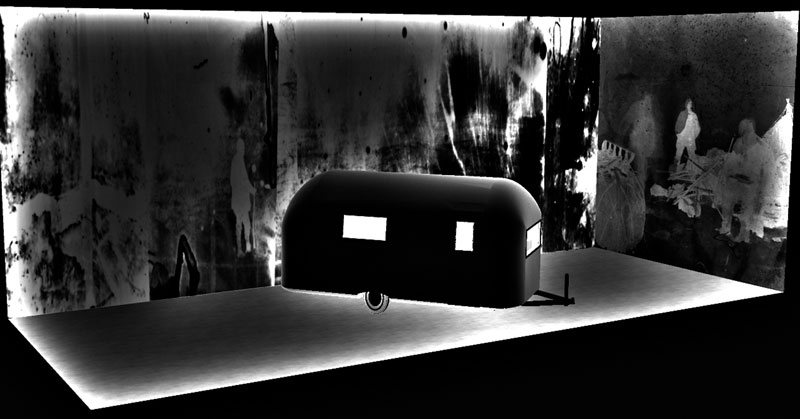
Designed from another cultural icon that, like photography, is often called on to embody and carry our phantoms and dreams, the traveling ICI field station is a handmade, paper, Airstream-like structure that houses and records the residency’s research activities. With its shiny surface, the vessel both consolidates and amplifies the visual world that surrounds it; that world—with its photographic fata morganas, its mirrored surfaces, its walk ways filled with large, glacier-like boxes of paper, and its darkened spaces interrupted by eruptions of light—seems to simulate the cold, barren place in which the featured photographs were born. Yet, this is also a world filled with the materials and processes of film-based photography. In truth, the polar trip that produced the images of the residency’s focus was gleaned by the researchers not to create a stage set of some past event but to create a land that is both ‘here and not yet built’ in which the images that inspired the residency are Möbius-like with the world they both inhabit and create.

In a similar way, the researchers’ toolbox relies less on the actual story of how the polar images ‘came into being’ and more on the modes of engagement that brought these images to the ICI’s attention. The photographs in question have always circulated in closed worlds – from the isolated and cut-off polar world of their embryonic beginning, to the frozen island of their undeveloped latency, then the archive drawer where, once developed, they languished due to legal entanglements, and finally to their current residency on a Swedish website, where copyright has limited their circulation. Realizing that these photographs exist both because of and in spite of their limited engagements, the ICI researchers have decided to treat their toolbox as another closed set – in which tools and materials are limited to those brought into the residency on day one and in which all the materials and remnants created will remain on site. Thereafter, any tools or materials needed will be added through MacGyver-esque maneuvers augmented by the researcher’s own ingenuity.

The residency toolbox abides by this restriction as a means of animating the researchers, but the work of the residency will not be subject to a closed set of rules. Inspired by the philosophical work of Deleuze and Guattari – who believed you have to create new concepts for unknown lands, the researchers have eschewed rule-based models, opting instead for an open, self-organizing system that is constantly adjusting and re-organizing itself. The concepts the researchers hope to pursue will not belong to one of photography’s discursive systems but will exist only in and because of the residency world, where they will reveal themselves over the course of the project as a means of proposing “a new threshold, a new direction, a new course for the border.” The residency will be less a testing site of rationally deduced theories about the limits of photography and more a series of meaningful encounters with residency-inspired concepts, and with the individuals who carry these concepts to the researchers in urgently scheduled interchanges. Together, these new ideas will help to frame the constantly shifting direction of the residency’s work.

Even with its overlaying systems of self-reference, In a Mere Full of Rime should not be thought of as a self-contained ‘world as art’ that could travel to any place that is big enough to house it. Ultimately, this is not a work of art to be placed into a world that can then be documented in a photograph but a “ work in art’s world,” as art historian Pamela Lee has termed it, where the photographs under study are both objects and agents of this art world. As much as the residency researchers will consider other trajectories, other histories, and other borders for photography, theirs is ultimately a research ‘at the outside of photography but not outside it.’ As such, the residency’s acts of interpretation will strive to ignite a network of associations, interrelations and affinities between these exceptional images and our current understandings of photography but not without tracking the art world’s stake—including the researcher’s own stake—in maintaining or disrupting these very boundaries.

 In a Mere Full of Rime: a search for photographys essence is a collaborative residency project of the Institute of Cultural Inquiry (ICI) in conjunction with Crossroads School’s Sam Francis Gallery and the Thin End of the Wedge (the E of the We) a peripatetic research entity that helps to bring ICI projects to sites around the world. The residency runs from January 16 to February 13, 2015 at the Sam Francis Gallery in Santa Monica, CA. The Opening is Thursday, January 15th from 6-8 pm. A finissage is planned for February 15 from 4-6 pm.

(Please note that the exhibition was extended to February 20, 2015)