AIDS Bottle Project

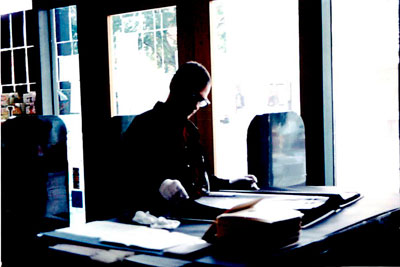
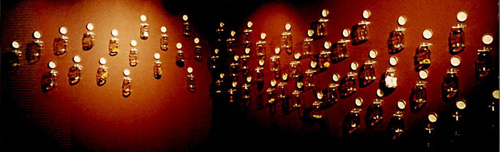
The AIDS Bottle Project is an interactive artist’s action conceived as a means of focusing attention on the AIDS crisis. From 1990 – 2000, in sites all over the United States and Europe, the ICI displayed bottles on December 1st of each year in conjunction with World AIDS Day.

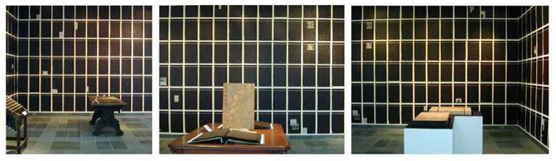
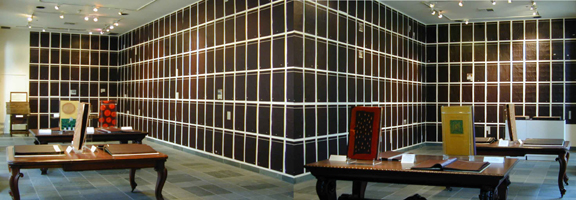
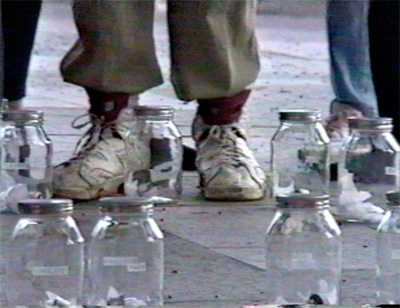
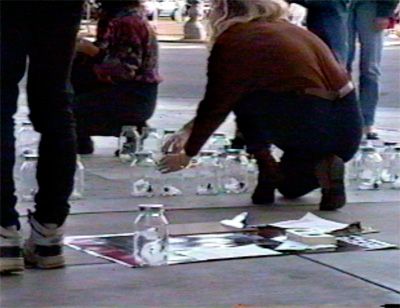
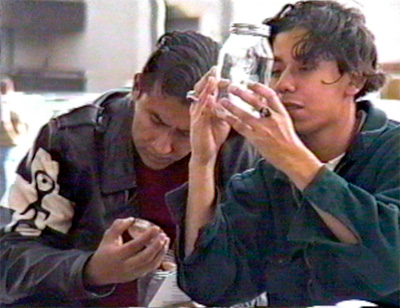
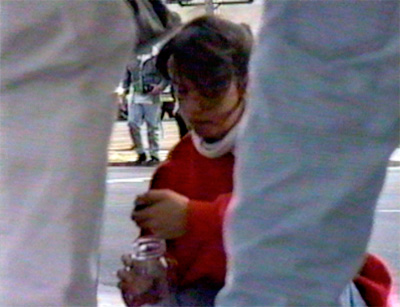
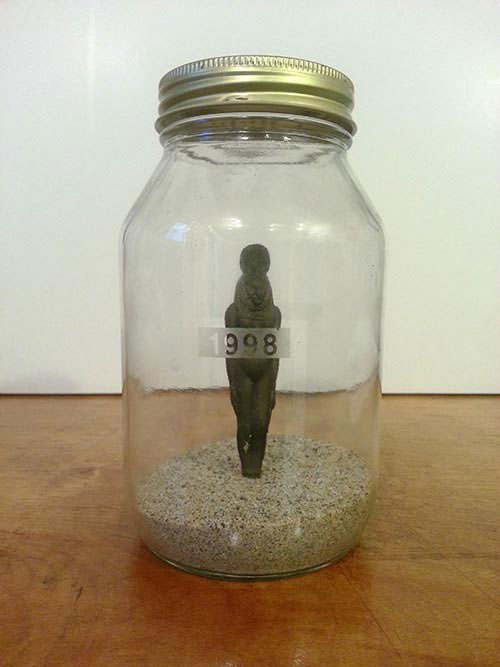
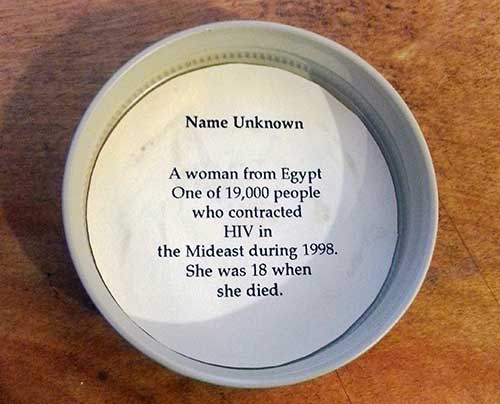
Each bottle represents a person who has died from complications due to AIDS or HIV. The name and year of death is etched on the glass and a short biography is printed under the lid. In public displays, the bottles were part of an interactive process. Jars were left open so that objects of personal significance could be added to them by visitors. Response books were also available to record a range of emotions. At the end of the display, the bottles were distributed to the public free of charge. The jars were offered not only to remember those who had died, but to emphasize the individual make-up of a community and the responsibility of each living member to resist complacency about the ongoing epidemic.
 

AIDS Bottle Project Exhibition History
1999 Over 1,000,000/under 24 at Sam Francis Gallery, Crossroads School for Arts and Sciences, Santa Monica
1998 Displayed at Santa Monica Festival, Santa Monica
100 Unknown Women at The Institute of Cultural Inquiry
1994
Workshop and display at Johnson State College, Vermont
Lecture and display at Montgomery Museum of Art, Alabama
Displayed at Midnight Special Bookstore , Santa Monica, CA.
1993 Display and lecture at Williams College, Massachusetts
City University of New York, New York City
1992 Displayed at Los Angeles Municipal Gallery,
SITE, Los Angeles
SPACE Gallery, Los Angeles
Watts Towers, Los Angeles
Birchfield Art Center, Buffalo, NY
University of California, Santa Barbara
1991 Displayed at Los Angeles County Museum of Art, LACMA
L.A. Eyeworks, Los Angeles
Armand Hammer Museum, Los Angeles
Grey Art Gallery, NYU, New York City
Washington D.C. Mall

Karl Bornstein Gallery, Santa Monica
Los Angeles Municipal Gallery
1990 Tactical intervention at Los Angeles County Museum of Art
Also shown at Richard Bennett Gallery, Los Angeles
1989 Visual AIDS launches Day Without Art on December 1 to coincide with World AIDS Day. The day of action and commemoration rallied artists and arts communities to remember those who have died from AIDS related illnesses.

WORLD AIDS DAY at the ICI

On Thursday, December 1, 2016, the ICI will recognize World AIDS Day through a number of community-based activities.

ICI OPEN HOUSE FEATURING THE AIDS CHRONICLES

Stop by the ICI from 4-6pm on Thursday December 1, 2016 to witness the completion of the 2001 AIDS Chronicle, designed and ‘bound’ by artist Martin Gantman. The complete pages that comprise the year (sans articles) will be burned onsite before being transferred to their permanent holding container along with all of the articles for the year that mention either HIV or AIDS.

Past and future (in-process) editions will also be available for viewing during the open house. Light refreshments will be served.

RHIZOMES

The ICI will showcase objects from its Ephemera Kabinett related to the AIDS activism in its online laboratory.

FIRST/LAST LINES

The ICI twitter feed will feature a  first/last line from a book in our library focused on the AIDS pandemic

ALL THE NEWS THAT FITS TO PAINT

Members of the community can help support the ICI’s longest-running project, the AIDS Chronicles, through an online page-painting campaign. Supporters can digitally paint pages of the Chronicle for as little as $2.50/page.

AIDS RESOURCES

check out our list of resources for AIDS education, testing, and treatment.

 WHAT IS WORLD AIDS DAY?

Since 1988, World AIDS day has inspired people to engage their community to dialogue about HIV/AIDS. Organizations and individuals’ worldwide initiate and build methods for productive conversations that serve to memorialize, celebrate, and educate their communities. Globally, of the estimated 35 million people infected with HIV, 3.2 million are children and 19 million don’t know they have HIV.  More than 39 million people have died from the virus, making it one of the most destructive pandemics in history. Despite the advances in retroviral drugs and the implementation of legislation safeguarding the civil rights of those with HIV and AIDS, many people remain ignorant about risks and preventative measures. Stigma and discrimination remain a reality for those afflicted. Despite the number of people diagnosed with HIV and AIDS each year —according to the World Health Organization, an estimated 2.1 million individuals worldwide became newly infected with HIV in 2013 — the issue receives less and less attention from the media. On December 1 of each year, World AIDS day serves as a global platform to remind the public and governments that HIV has not gone away, and if eradication is to be its future, now is a time for vigilance, education, and hope. Events in honor of World AIDS Day include art exhibits, rallies, seminars, “free-days” at clinics, memorials and tactical events.


AIDS RESOURCES

Acquired immune deficiency syndrome or acquired immunodeficiency syndrome (AIDS) is a disease of the human immune system caused by the human immunodeficiency virus (HIV). The virus and disease are often referred to together as HIV/AIDS, however having HIV does not mean that you have AIDS. A person is diagnosed with AIDS when either the numbers of specific types of cells in their immune system drop below a certain level or when they develop one of a specific group of opportunistic infections. Although treatments for HIV/AIDS can slow the course of the disease, there is no known cure or HIV vaccine. Antiretroviral treatment reduces both the deaths and new infections from HIV/AIDS, and new research is continuously under way in this area. Thanks to global improvements in antiretroviral drugs and AIDS therapy, many infected people can sustain a normal lifestyle. However, due to the continued difficulty in treating HIV, prevention is a key aim in controlling the AIDS pandemic. We hope this list of resources will help educate your family and friends about safe sex, needle-exchange programs and treatment plans all of which help to slow the spread of the virus.

GENERAL INFORMATION

AIDS.ORG provides easy and fast access to AIDS information. They provide prevention, testing, and treatment information currently to well over 4 million people a year. AIDS.ORG has been awarded the “Health on the Net Foundation” Code of Conduct (HONcode) seal for reliability and credibility of information in the field of healthcare.
AIDS.gov  The official government website concerning AIDS awareness, education and research
NAM National AIDS Manual. A great place to get up to date figures about the AIDS epidemic.

AIDS TESTING

LOS ANGELES
Los Angeles County STD Program (publichealth.lacounty.gov/dhsp/STDClinics.htm)

NATIONAL
National HIV and STD Testing Resources (www.hivtest.org/) 
Center for Disease Control (CDC) 
(gettested.cdc.gov/)

AIDS PREVENTION

LOS ANGELES
L.A. Gay and Lesbian Center Offers HIV care, testing, Pre-exposure Prophylaxis (PrEP), Post-exposure Prophylaxis (PEP) and preventitive support groups ( https://lalgbtcenter.org/health-services/hiv-related-services)

NATIONAL
AVERT (http://www.avert.org/aids-hiv-prevention.htm)
National Clean Needle Exchanges (NASEN) (http://www.nasen.org/programs/)
Center for Disease Control (CDC) (www.cdc.gov/hiv/default.htm)
Government Prevention Programs aids.gov/federal-resources/hiv-aids-programs/prevention-programs/

AIDS SERVICES

LOS ANGELES
AIDS Project Los Angeles (http://www.apla.org/)
Offers bilingual benefits and insurance counseling, case management, education and training, dental services, home health care assistance, public advocacy, mental health services, food pantries, print publications, housing services and work services in Los Angeles County. (En Espanol: (http://www.apla.org/espanol/))
Aid For AIDS
(http://www.aidforaids.net/)
Provides the basic necessities of life to men, women, children and families living with HIV/AIDS in Los Angeles County through a safety net of essential housing and direct supportive services.

NATIONAL
National AIDS Housing Coalition
(http://nationalaidshousing.org/)
Provides access to food banks, housing opportunities, counseling, and access to information about support-groups nation wide.
AIDSMEDS Forums
(http://www.actupny.org/)
A round-the-clock discussion area for people with HIV/AIDS, their friends/family/caregivers, and others concerned about HIV/AIDS.
Shanti Organization (http://www.shanti.org/pages/about-hiv-services.html)
Shanti has been at the forefront of a growing national movement to enhance the quality of life for persons living with life-threatening or chronic illnesses by providing volunteer-based emotional and practical support.

COMMUNICATING ABOUT HIV/AIDS (HOW TO TALK TO YOUR KIDS AND LOVED ONES)

LOS ANGELES
L.A. Gay and Lesbian Center
(https://lalgbtcenter.org/health-services/hiv-related-services/support-groups )

NATIONAL
The Body
http://www.thebody.com/content/art2412.html
Children Now
http://www.childrennow.org/parenting-resources/hivaids/

ICI Bylaws and AIDS

Seventeen years ago, the ICI drew up the legal papers required for Federal incorporation as a non profit arts and cultural organization. Recently we were reviewing these papers for an internal audit and were reminded that our strong commitment to AIDS awareness was actually written into our bylaws. Here is an excerpt from the section titled PURPOSES:

2. To sponsor an annual event focusing attention on HIV disease for as long as AIDS continues to be a national and international crisis. This public event will educate the general public as to how the disease is culturally described and discussed and will allow an open forum for ideas and opinions about these methods.
3. To create, maintain, and made available to the public, a database containing the names of people who have died from AIDS and AIDS-related illness.

Overall, we have met our goals through an array of events on December 1. This year we’ll take to the streets with Forget Foucault.

Our database of AIDS deaths is relegated to binder notebooks containing page after page of NYT obituaries. Although the names are not available to our virtual supporters there is something poignant and memorable about the aging newspaper clippings. While their scumbled surfaces point to the duration of time since their passing, they also embody a palpable feeling of loss that might elude a strictly digital database.


Craig Owens by John Galt

For most artists of a certain age they can remember the first time the public discourse on HIV suddenly became personal through the death of a loved one, a diagnosis of a friend or a long afternoon as an HIV test was being analyzed.  For ICI founder and director Lise Patt, that moment came in 1990 when the art critic Craig Owens died of AIDS. As she recounts it:

Owens wasn’t the first person I knew to die of AIDS and sadly he wasn’t the last one but I remember feeling like someone had punched me in the stomach when I heard of his passing. By 1990, the year of Owens death, AIDS was clearly robbing us of talented painters, photographers and other visual artists but up to that point I didn’t realize that it was also going to steal our voice – the people who talk for us, that contextualize our work, that write us into a history that is fickle at best and often unkind to those of us who create with our hands and not with words.

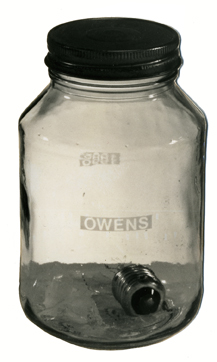
John Galt, a long-time associate of the ICI, gave Patt this bottle to help assuage her dis-ease. A recycled mayonnaise jar, on the outside surface he etched Owens name and the year of his death. Under the lid was a brief biography and inside the bottle he placed a shattered light bulb, an insider’s message from Galt to Patt, who had often spoke of Owen’s landmark essay “The Allegorical Impulse” as the light bulb that lit her art practice.

In the fall of the same year, Patt asked Galt if she could use his form for a project she was working on. On December 1, 1990 that project was born as the AIDS Bottle Project. Borrowing Galt’s form, 100 bottles representing 100 individuals in the arts who had died from AIDS were displayed at Los Angeles County Museum of Art.