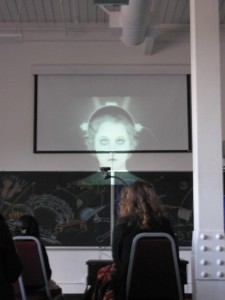
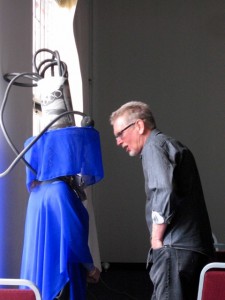
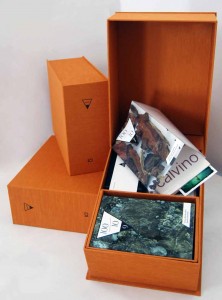
 The catalogs for the 100/10 (100 days/10 visions) project are an homage to many o f the ICI’s favorite people and things: W.G. Sebald, his poem After Nature, and The New Museum in New York. Modeled on the museum’s catalog for its 2008 exhibition After Nature, this ICI Press edition also owes allegiance to Aby Warburg (1866-1929). Warburg, lamenting the possible loss of open stacks in public libraries, argued that when looking for a desired book on a library shelf it is often its neighbor that first draws your attention, its good neighbor that holds the answer you are seeking.Under the dustcover of each catalog you’ll find a “good neighbor,” a book that impacted the curator of each iteration (and so, a different title for each participant) even though that book’s influence may not be immediately apparent in the exhibition photos that are sprinkled within its pages.
The 100/10 Complete Catalog is boxed in a silk clamshell box. The edition includes the catalogs for each iteration of the 100/10 project (10 in total), a removable colophon and an ICI “extra” hidden in each box. The ten catalogs contain several color inserts that document each of their corresponding projects.
The 100/10 Complete Catalog has been issued in an edition of 5 with three artist proofs.
Price: $325 at the ICI Gift Shop
These are the books that comprise this unique edition coupled with the dustcover catalog that is folded around each book. They can be purchased individually in our gift shop.
 100/10/1: Alex Harvey and Anna Ayeroff
The Songlines by Bruce Chatwin
“The aboriginals in Australia believe that their ancestors sang the world into existence. Our utopian ancestors believed their world into existence. By returning to the desert, they discovered themselves.”

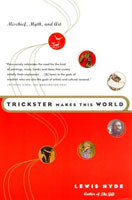 100/10/2: R. Coppens and A. LaFarge
Trickster Makes the World by Lewis Hyde
“In myth, one of the trickster’s primary roles has been to cross, blur, fracture, and render permeable the boundaries by which cultural categories are stabilized.”

 100/10/3: Norway Nori
The Blue and Brown Books by Ludwig Wittgenstein
“Much like Wittgenstein’s Blue Book, Norway Nori uses a loose web of thought and ideas to construct his confusing and slightly annoying questionnaires. Our answers to his queries reveal silent resemblances among a group of respondents.”

 100/10/4: P. Evans and K. Frimkess-Wolff
The Enormous Room by E. E. Cummings
“ To create is first of all to destroy—there can be no such thing as authentic art until the bon trucs [good dodges] are entirely and thoroughly and perfectly annihilated.”
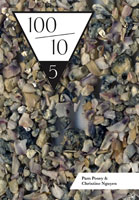
 100/10/5: Pam Posey and Christine Nguyen
Tinkers by Paul Harding
“Tinkers offers a different way of perceiving nature. Harding describes the dismantling of the mechanisms of the brain alongside the collapse of the perceived world.”

 100/10/6: C. Dillbohner and I. Kamps
Paracelsus by Sergius Golowin
“Today Paracelsus’ knowledge and accomplishments are described as ‘wholistic.’ He is the pioneer in the domain of empirical psychological healing science.”
100/10/7: C. Smith and R. Woodward Smith

Invisible Cities by Italo Calvino
“Driving around L.A. after living in Europe for ten years, I was struck by a sense of disconnection. The question became how can we map what we feel, how we experience the sense of place.”

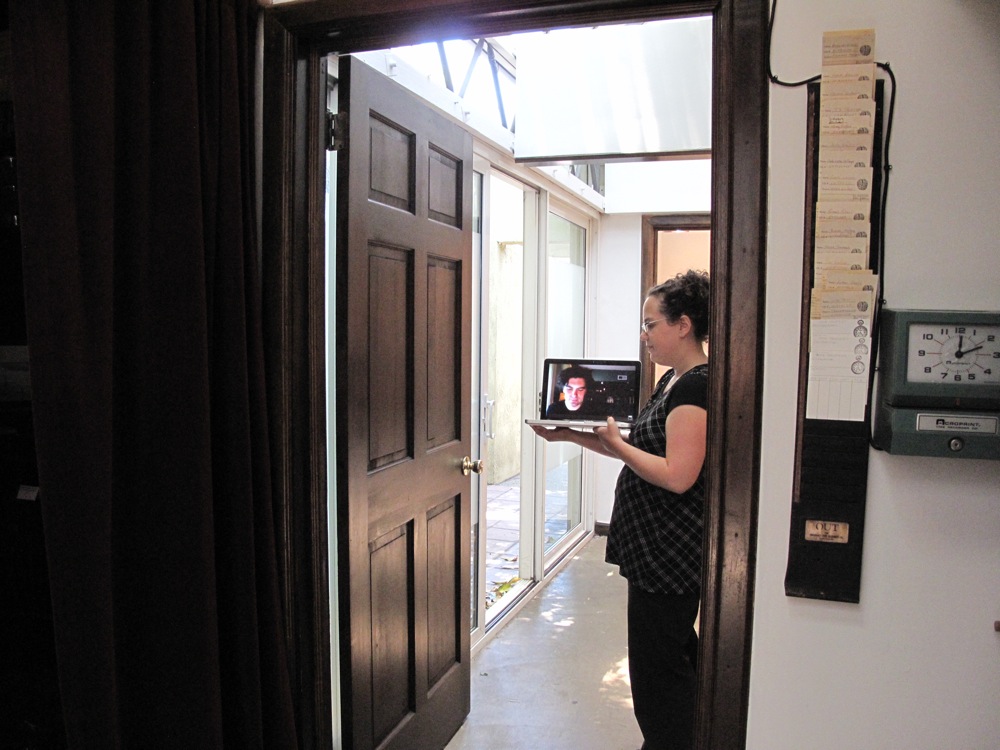
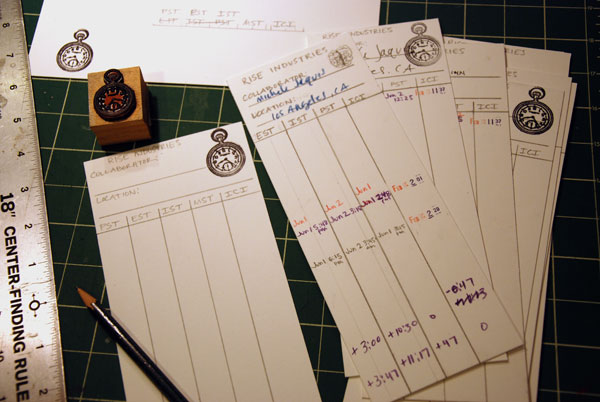
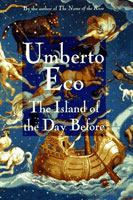 100/10/8: Rise Industries
The Island of the Day Before by Umberto Eco
“Our work is not pure research, and not even necessarily practical in nature. Rather, it aspires toward Eco’s lyrical explorations, deft navigations through multivalent time and space.”
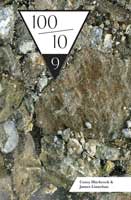
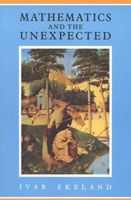
100/10/9: C. Hitchcock and J. Linnehan
Mathematics and the Unexpected by Ivar Ekeland
“Ekeland chose Hieronymous Bosch’s The Temptation of St. Anthony as the cover image for his book. The author’s metaphors for mathematics are no less hallucinatory.”
 100/10/10: terra publica (coordinated by E. Baek and J. Black)
blank sketchbook
“the blank book calls upon individuals to move out into the ‘field’ of the project, to the very earth we all inhabit.”
You can read more about the complete 100/10 project here.

 The ICI has scheduled a series of monthly sessions to help ease the application process for individuals who want to submit curatorial proposals. During each session, we’ll present one of our ongoing projects as a means of demonstrating (not merely presenting) the ICI method.