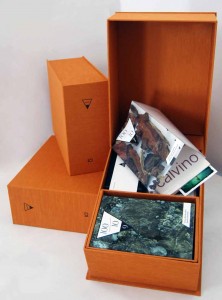
100/10 Complete Catalog

ICIP-100_10comp-wThe catalogs for the 100/10 (100  days/10 visions) project are an homage to many o f the ICI’s favorite people and things: W.G. Sebald, his poem After Nature, and The New Museum in New York. Modeled on the museum’s catalog for its 2008 exhibition After Nature, this ICI Press edition also owes allegiance to Aby Warburg (1866­-1929). Warburg, lamenting the possible loss of open stacks in public libraries, argued that when looking for a desired book on a library shelf it is often its neighbor that first draws your attention, its good neighbor that holds the answer you are seeking.Under the dustcover of each catalog you’ll find a “good neighbor,” a book that impacted the curator of each iteration (and so, a different title for each participant) even though that book’s influence may not be immediately apparent in the exhibition photos that are sprinkled within its pages.

The 100/10 Complete Catalog is boxed in a silk clamshell box. The edition includes the catalogs for each iteration of the 100/10 project (10 in total), a removable colophon and an ICI “extra” hidden in each box. The ten catalogs contain several color inserts that document each of their corresponding projects.

The 100/10 Complete Catalog has been issued in an edition of 5 with three artist proofs.

Price: $325 at the  ICI Gift Shop

These are the books that comprise this unique edition coupled with the dustcover catalog that is folded around each book. They can be purchased individually in our gift shop.
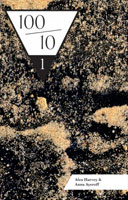
ICIP-100_10_1cover-w100/10/1: Alex Harvey and Anna Ayeroff

The Songlines by Bruce Chatwin

“The aboriginals in Australia believe that their ancestors sang the world into existence. Our utopian ancestors believed their world into existence. By returning to the desert, they discovered themselves.”

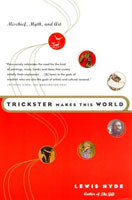
 

100/10/2: R. Coppens and A. LaFarge

Trickster Makes the World by Lewis Hyde

“In myth, one of the trickster’s primary roles has been to cross, blur, fracture, and render permeable the boundaries by which cultural categories are stabilized.”


100/10/3: Norway Nori

The Blue and Brown Books by Ludwig Wittgenstein

Much like Wittgenstein’s Blue Book, Norway Nori uses a loose web of thought and ideas to construct his confusing and slightly annoying questionnaires. Our answers to his queries reveal silent resemblances among a group of respondents.”

100/10/4: P. Evans and K. Frimkess-Wolff

The Enormous Room by E. E. Cummings

To create is first of all to destroy—there can be no such thing as authentic art until the bon trucs [good dodges] are entirely and thoroughly and perfectly annihilated.”
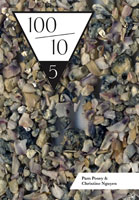
 

100/10/5: Pam Posey and Christine Nguyen

Tinkers by Paul Harding

Tinkers offers a different way of perceiving nature. Harding describes the dismantling of the mechanisms of the brain alongside the collapse of the perceived world.”


100/10/6: C. Dillbohner and I. Kamps

Paracelsus by Sergius Golowin

“Today Paracelsus’ knowledge and accomplishments are described as ‘wholistic.’ He is the pioneer in the domain of empirical psychological healing science.”


100/10/7: C. Smith and R. Woodward Smith

Invisible Cities by Italo Calvino

“Driving around L.A. after living in Europe for ten years, I was struck by a sense of disconnection. The question became how can we map what we feel, how we experience the sense of place.”

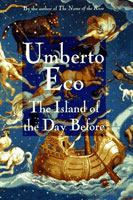
 

100/10/8: Rise Industries

The Island of the Day Before by Umberto Eco

“Our work is not pure research, and not even necessarily practical in nature. Rather, it aspires toward Eco’s lyrical explorations, deft navigations through multivalent time and space.”


100/10/9: C. Hitchcock and J. Linnehan

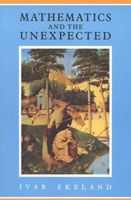
Mathematics and the Unexpected by Ivar Ekeland

“Ekeland chose Hieronymous Bosch’s The Temptation of St. Anthony as the cover image for his book. The author’s metaphors for mathematics are no less hallucinatory.”


100/10/10: terra publica (coordinated by E. Baek and J. Black)

blank sketchbook

the blank book calls upon individuals to move out into the ‘field’ of the project, to the very earth we all inhabit.”

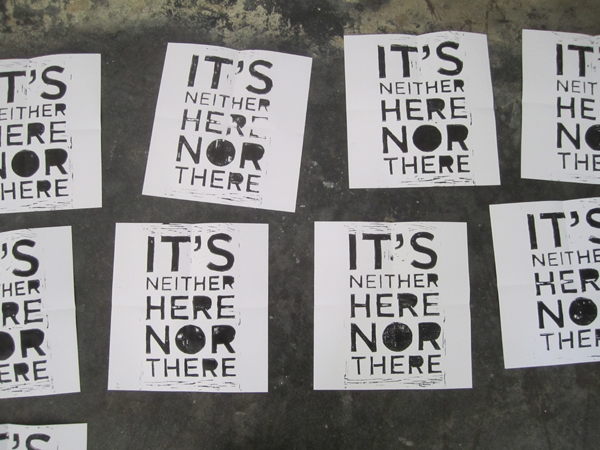
 

You can read more about the complete 100/10 project here.

100/10∆10 The Earth Project Archive

Coordinated by Jojo Black and Elisa Baek with contributions by terra publica
June 28 – August 15, 2011

Mappa Mundi: The Earth Project drew inspiration from the ICI’s “Earth Cabinet”, a collection of dirt specimens from all over the world currently housed in a refurbished communion cabinet. These specimens comprise of dirt, dust, grit, shell, sand and other types of earth material from locations including: Ayres Rock, Australia; Suzhou, China; Stonehenge; the Berlin Wall; Zion, Utah; Jerusalem, Israel; Kanagawa, Japan; Paris Catacombs; the Grand Canyon; Gubbio, Italy; and Giza, Egypt. The “Earth Cabinet” collection brings together a myriad of geographic terrains to reveal where the Institute of Cultural Inquiry and its publics have visited in the past, as well as where they might go in the future.

Using the tools and resources of the Internet, The Earth Project provided a platform for people to contribute their own “earth samples” and plot them out on an interactive world map where others can easily view and share them across various networks.

Through their contributions, the terra publica (people of the earth) became the curators of this project. They selected the material, they made the connections, the interpretations, the meanings, they gave the “earth samples” their movement and purpose. 100/10 was an invitation to construct a new world map, one that reflects all the intricacies and experiences we share as individuals on this journey through earth’s terrains.

Here, you find an archived interactive map of The Earth Project – and explore the contributions of terra publica. An archived capture of Mappa Mundi: The Earth Project website, which provided the platform for participation, can also be seen below. You can also visit the documentation page at our laboratory for more information.


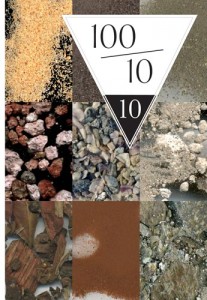
100/10∆10 Mappa Mundi: The Earth Project Catalog

100/10∆10: terra publica, coordinated by Jojo Black and Elisa Baek

The catalogs for the 100/10 (100 days/10 visions) project are an homage to many of the ICI’s favorite people and things: W. G. Sebaftald, his poem After Nature, The New Museum in New York. Modeled on that museum’s catalog for their 2008 exhibition After Nature, this book also owes allegiance to Aby Warburg (1866-1929). Under the dustcover you’ll find a “good neighbor,” a book that impacted the curator of this project iteration (and so, a different title for each participant) even though that book’s influence may not be immediately apparent in the exhibition photos that are sprinkled within its pages. Warburg, lamenting the possible loss of open stacks in public libraries, argued that when looking for a desired book on a library shelf it is often its neighbor that first draws your attention, its good neighbor that holds the answer you are seeking.

This catalog can be purchased in our gift shop for $20. (additional fee for shipping)

100/10∆9 Catalog

The catalogs for the 100/10 (100 days/10 visions) project are an homage to many of the ICI’s favorite people and things: W. G. Sebald, his poem After Nature, The New Museum in New York. Modeled on that museum’s catalog for their 2008 exhibition After Nature, this book also owes allegiance to Aby Warburg (1866-1929). Under the dustcover you’ll find a “good neighbor,” a book that impacted the curator of this project iteration (and so, a different title for each participant) even though that book’s influence may not be immediately apparent in the exhibition photos that are sprinkled within its pages. Warburg, lamenting the possible loss of open stacks in public libraries, argued that when looking for a desired book on a library shelf it is often its neighbor that first draws your attention, its good neighbor that holds the answer you are seeking.

This catalog can be purchased in the ICI gift shop for $25.

100/10∆10 Press Release

Institute of Cultural Inquiry 100/10/10 Earth Project100/10∆10: Mappa Mundi:
The Earth Project

Project Launch: Tuesday, June 28, 12:00 pm 
Coordinated by Jojo Black and Elisa Baek with contributions by terra publica

Free and open to the public
Selections from the collaborative final iteration of the 100/10 project can be viewed online here.


For the tenth and final iteration of the Institute of Cultural Inquiry’s ambitious project 100/10 (100 days/10 visions), Mappa Mundi: The Earth Project explores the notion that we are all of the earth, allied through terrestrial bounds, living along an assortment of grounds that reflect both the diversity and uniformity of our world. 100/10∆10 is a participatory project of the Institute of Cultural Inquiry (ICI) that exists with and through the terra publica – the people of the earth – who use the tools and networks of the Internet to collectively re-imagine a world map within the context of human experience.

The Earth Project draws inspiration from the Institute of Cultural Inquiry’s “Earth Cabinet”, a collection of dirt specimens from all over the world currently housed in a refurbished communion cabinet. These specimens comprise of dirt, dust, grit, shell, sand and other types of earth material from locations including: Ayres Rock, Australia; Suzhou, China; Stonehenge; the Berlin Wall; Zion, Utah; Jerusalem, Israel; Kanagawa, Japan; Paris Catacombs; the Grand Canyon; Gubbio, Italy; and Giza, Egypt. The “Earth Cabinet” collection brings together a myriad of geographic terrains to reveal where ICI and its publics have visited in the past, as well as where they might go in the future.

Building on the ICI’s interest in exploring the intangible and ever-changing phenomenon known as “culture”, Mappa Mundi: The Earth Project extends the focus of the “Earth Cabinet” by constructing and supporting an online world map where new spaces for perception, memory, history, and time are created by reinterpreting the practices of visual thinking within contemporary society. The project conceptualizes art as an open, cross-disciplinary culture-building activity, where hybrid forms of cooperation and production can emerge freely within the given form. The project’s use of a world map advances ICI’s belief that mapmaking is more about creating and revealing connections through the process of discovery than it is about simply charting areas of the world. With the project’s open-ended directions to help foster the potentialities inherent in participants’ interpretations, the platform of a world map doubles as a public laboratory for cultivating and developing ideas with and through the terra publica.

A unique catalogue will accompany this exhibition, modeled on the New Museum’s catalog for its 2008 landmark show After Nature. Catalogs for the 100/10 shows exist as a dustcover enfolding a slightly used copy of a book that has influenced the show’s curator and artist. 100/10∆10 uses a small, blank sketchbook with field implements, such as small specimen bags and identification tags, nestled between pages. This empty workbook points back to this project’s “potentialities inherent in participants’ interpretations” and calls upon individuals to move out into the “field” of the project, the very earth in which we all inhabit. The catalogs are available online in the ICI gift shop.

Beginning January 31, 2011 and running for 100 consecutive business days, the ICI site and its archives is undergoing a multitude of interpretations. ICI has invited ten researchers-artists, writers, and visual thinkers-to set into play ideas that blend contemporary visual practices with aspects of the ICI Earth Cabinet, Ephemera Kabinett, and a 2,500+ volume library along with the nooks and crannies of the eclectic, historically layered ICI space. With two weeks to conceive of their vision, curators will work in a designated laboratory modeled upon the transparent workspaces of 19th-century natural history museums. Each curator will conceptualize a new trajectory through ICI’s body, transforming the ICI display by the end of their residency. 100/10 project participants to date have included ∆1: Alex Harvey with Anna Ayeroff; ∆2: Antoinette LaFarge with Ruth Coppens; ∆3: Norway Nori; ∆4: Karen Frimkess Wolff and Paul W. Evans; ∆5: Pam Posey with Christine Nguyen; ∆6: Christel Dillbohner with Inge Kamps; ∆7: Christian Smith and Rosie Woodward Smith; ∆8: Jeremy J. Quinn and Michele Jaquis of Rise Industries; as well as ∆9: Corey Hitchcock and James Linnehan.

Since 1991, the Institute of Cultural Inquiry (ICI) has explored the role of visuality in imagining, perpetrating and perpetuating the intangible and ever-changing phenomena known as “culture.” The ICI sponsors displays, symposia, workshops, performances and provides numerous opportunities for both the artist fabricator and the curious spectator of visual culture. The non-profit organization also maintains an active publishing program, releasing the critically acclaimed Searching for Sebald: Photography After W. G. Sebald in 2007. 100/10 is the first project conceptualized within the 2011-12 ICI study theme of Phantom Worlds.

Purchase catalog for 100/10∆10.
Read more about the complete 100/10 project.