AIDS Chronicles

About the Chronicles

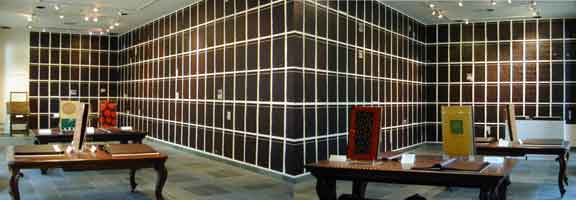
The AIDS Chronicles are historical, statistical documents that record the discourse surrounding one of the defining events of our age: the AIDS pandemic. Each yearly volume consists of 365 front pages from the New York Times, collected over the year from 1 December to 30 November.  These pages are treated on both sides with three layers of acrylic paint, producing blood-red sheets that leave visible only images or articles that mention AIDS or HIV, thus recording of the (lack of) day-to-day discourse on AIDS in one of the most read newspapers in the United States.

Periodically, these documents are displayed on December 1st, World AIDS Day, either on a pedestal or in an imposing grid arrangement, to allow members of the community to view the pages that mark a year of AIDS history. After each period of display, an artist is commissioned by the Institute to bind the pages and create an original cover for the annual volume before it is deposited in the ICI Library for permanent display. In years when the Chronicles are not displayed, associates, supporters and community volunteers come together on December 1st to paint the pages of these yearly tomes.

The process of creating Chronicle pages is not difficult but it is time-consuming. Not only are the pages subjected to a three-part painting process on each side, they also must be cut, read for articles, arranged chronologically and interleafed with glassine. On average, each page takes 1.5 hours to produce. The method of their making and display is simple but the questions are endless and complex.

The following links provide overview of the history and current status of this project:

*  EDITIONS IN PROGRESS  *  COMPLETED EDITIONS  *  DISPLAY HISTORY  *

If you are interested in creating a cover for a volume of the AIDS Chronicles, or if you would like to participate in this project as a volunteer, please contact us. You can support the continuation of this project by painting pages digitally here or through our gift shop.

Associate Axel Forrester in London Exhibition

Axel Forrester, one of our founding associates, relocated to England over two years ago. Read about her film, Severance, in a review of a London exhibition curated by Annika Erikson that includes this work.

It follows a string of commuters travelling on the Paris Métro, with eyes closed or staring into space. It is an interesting and visually appealing study of the phenomenon of moving alone in and through public places, being surrounded by people but remaining disconnected.

Read the entire review or check out some of Axel’s videos.

ICI Research Group Forming for Barthes’ Tear

spider in the web


All the world’s photographs formed a Labyrinth. I knew that at the center of this Labyrinth I would find nothing but this sole picture, fulfilling Nietzsche’s prophecy: “A labyrinthine man never seeks the truth, but only his Ariadne.”

– Roland Barthes


In Camera Lucida, Barthes “finds” his mother in a single photograph. He muses, it is “the only photograph which assuredly existed for me.” In this case, “the one” also becomes the only picture from which Barthes will “’derive’ all Photography” in what would become his one and only book on photography.

“The one” connotes other singularities: the masterpiece, the exception, the anomaly, the worst and the best. The one is the individual within the masses, the single mutant and the freak accident that produced it, and the single events of anything that lives: a birth and then, a death. Does “the one” rise to the top, or sink to the bottom without our discovery or intervention? Or does it require invention, an act of selection, a resuscitation in which we create a sole survivor in a sea ‘almost-ones’ that have lost (have become lost in) their bid for uniqueness?

We are now forming a research group in conjunction with the ICI’s upcoming publication project centered on Barthes’ seminal book. We are looking for writers, artists, scholars, practitioners and curious spectators to join our team; anyone who has an interest in Barthes, or photography, or books about/as art. We intend to begin our meetings in the first month of 2012 and to convene on a monthly basis. Individuals who attend the first couple of sessions will determine the course and nature of the group. Our first act will be to interrogate the very term that has been selected to seed our inquiry. A pilot ICI project centered on ‘remote channels’ will enable distant participants. We encourage inquiries from individuals with shared interests but different time zones.

Please send a statement of interest to the ICI by December 15, 2011. Indicate your interest(s) and any limitations on your schedule: info@culturalinquiry.org.

Information Sessions for Curatorial Projects

Manual of Lost IdeasThe ICI has scheduled a series of monthly sessions to help ease the application process for individuals who want to submit curatorial proposals. During each session, we’ll present one of our ongoing projects as a means of demonstrating (not merely presenting) the ICI method.

The first session will be on Wednesday, November 9, 2011 at 7 p.m. and will focus on the Manual of Lost Ideas. Please rsvp by October 31 at info@culturalinquiry.org


Visual Researcher-in-Residence

The Visual Researcher-in-Residence program is designed for artists, writers, scholars or serious tinkerers, whos work or ideas fall outside of the typical bounds of recognized visual genres. We are looking for a visual researcher(s) whose cultural investigations, analyses, examinations, and experimentations are sympathetic with that of the Institute. The visual researcher will be offered a research space and access to the ICI library as well as the ICI’s collection of visual tools.
The ICI’s current research theme is PHANTOM, MIRRORED, AND DOUBLED WORLDS and the resident will be encouraged to interface with this theme.

100/10 Complete Catalog

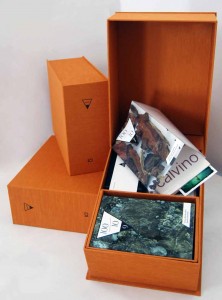
ICIP-100_10comp-wThe catalogs for the 100/10 (100  days/10 visions) project are an homage to many o f the ICI’s favorite people and things: W.G. Sebald, his poem After Nature, and The New Museum in New York. Modeled on the museum’s catalog for its 2008 exhibition After Nature, this ICI Press edition also owes allegiance to Aby Warburg (1866­-1929). Warburg, lamenting the possible loss of open stacks in public libraries, argued that when looking for a desired book on a library shelf it is often its neighbor that first draws your attention, its good neighbor that holds the answer you are seeking.Under the dustcover of each catalog you’ll find a “good neighbor,” a book that impacted the curator of each iteration (and so, a different title for each participant) even though that book’s influence may not be immediately apparent in the exhibition photos that are sprinkled within its pages.

The 100/10 Complete Catalog is boxed in a silk clamshell box. The edition includes the catalogs for each iteration of the 100/10 project (10 in total), a removable colophon and an ICI “extra” hidden in each box. The ten catalogs contain several color inserts that document each of their corresponding projects.

The 100/10 Complete Catalog has been issued in an edition of 5 with three artist proofs.

Price: $325 at the  ICI Gift Shop

These are the books that comprise this unique edition coupled with the dustcover catalog that is folded around each book. They can be purchased individually in our gift shop.
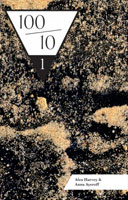
ICIP-100_10_1cover-w100/10/1: Alex Harvey and Anna Ayeroff

The Songlines by Bruce Chatwin

“The aboriginals in Australia believe that their ancestors sang the world into existence. Our utopian ancestors believed their world into existence. By returning to the desert, they discovered themselves.”

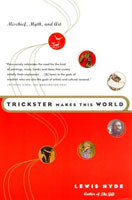
 

100/10/2: R. Coppens and A. LaFarge

Trickster Makes the World by Lewis Hyde

“In myth, one of the trickster’s primary roles has been to cross, blur, fracture, and render permeable the boundaries by which cultural categories are stabilized.”


100/10/3: Norway Nori

The Blue and Brown Books by Ludwig Wittgenstein

Much like Wittgenstein’s Blue Book, Norway Nori uses a loose web of thought and ideas to construct his confusing and slightly annoying questionnaires. Our answers to his queries reveal silent resemblances among a group of respondents.”

100/10/4: P. Evans and K. Frimkess-Wolff

The Enormous Room by E. E. Cummings

To create is first of all to destroy—there can be no such thing as authentic art until the bon trucs [good dodges] are entirely and thoroughly and perfectly annihilated.”
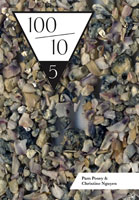
 

100/10/5: Pam Posey and Christine Nguyen

Tinkers by Paul Harding

Tinkers offers a different way of perceiving nature. Harding describes the dismantling of the mechanisms of the brain alongside the collapse of the perceived world.”


100/10/6: C. Dillbohner and I. Kamps

Paracelsus by Sergius Golowin

“Today Paracelsus’ knowledge and accomplishments are described as ‘wholistic.’ He is the pioneer in the domain of empirical psychological healing science.”


100/10/7: C. Smith and R. Woodward Smith

Invisible Cities by Italo Calvino

“Driving around L.A. after living in Europe for ten years, I was struck by a sense of disconnection. The question became how can we map what we feel, how we experience the sense of place.”

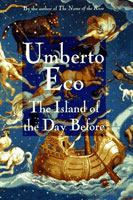
 

100/10/8: Rise Industries

The Island of the Day Before by Umberto Eco

“Our work is not pure research, and not even necessarily practical in nature. Rather, it aspires toward Eco’s lyrical explorations, deft navigations through multivalent time and space.”
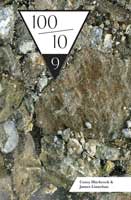
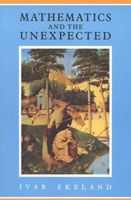


100/10/9: C. Hitchcock and J. Linnehan

Mathematics and the Unexpected by Ivar Ekeland

“Ekeland chose Hieronymous Bosch’s The Temptation of St. Anthony as the cover image for his book. The author’s metaphors for mathematics are no less hallucinatory.”


100/10/10: terra publica (coordinated by E. Baek and J. Black)

blank sketchbook

the blank book calls upon individuals to move out into the ‘field’ of the project, to the very earth we all inhabit.”


You can read more about the complete 100/10 project here.

100/10∆10 The Earth Project Archive

Coordinated by Jojo Black and Elisa Baek with contributions by terra publica
June 28 – August 15, 2011

Mappa Mundi: The Earth Project drew inspiration from the ICI’s “Earth Cabinet”, a collection of dirt specimens from all over the world currently housed in a refurbished communion cabinet. These specimens comprise of dirt, dust, grit, shell, sand and other types of earth material from locations including: Ayres Rock, Australia; Suzhou, China; Stonehenge; the Berlin Wall; Zion, Utah; Jerusalem, Israel; Kanagawa, Japan; Paris Catacombs; the Grand Canyon; Gubbio, Italy; and Giza, Egypt. The “Earth Cabinet” collection brings together a myriad of geographic terrains to reveal where the Institute of Cultural Inquiry and its publics have visited in the past, as well as where they might go in the future.

Using the tools and resources of the Internet, The Earth Project provided a platform for people to contribute their own “earth samples” and plot them out on an interactive world map where others can easily view and share them across various networks.

Through their contributions, the terra publica (people of the earth) became the curators of this project. They selected the material, they made the connections, the interpretations, the meanings, they gave the “earth samples” their movement and purpose. 100/10 was an invitation to construct a new world map, one that reflects all the intricacies and experiences we share as individuals on this journey through earth’s terrains.

Here, you find an archived interactive map of The Earth Project – and explore the contributions of terra publica. An archived capture of Mappa Mundi: The Earth Project website, which provided the platform for participation, can also be seen below. You can also visit the documentation page at our laboratory for more information.